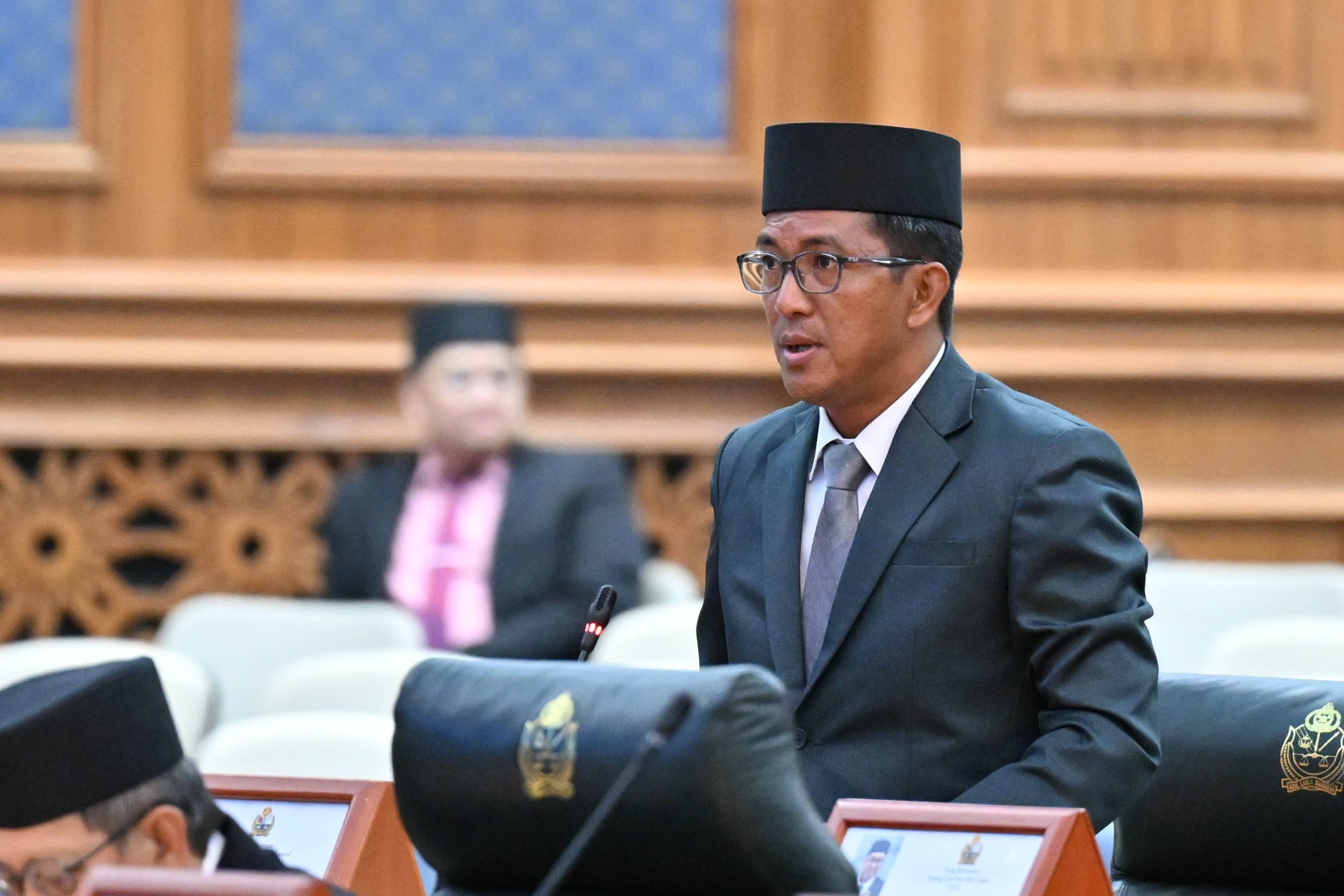
Stronger coordination across government and wider national stakeholders is crucial to ensuring the successful implementation of Brunei Vision 2035, said Legislative Council (LegCo) member Yang Berhormat Zainol bin Haji Mohamed during the debate on the motion supporting coordination towards achieving the national vision on the Second Meeting of the 22nd Session of the LegCo.
Expressing his support for the establishment of coordinating ministers, Yang Berhormat Zainol described the initiative as a significant step in strengthening the government’s institutional capacity to lead the country’s development agenda as Brunei Vision 2035 enters a more critical phase of implementation.
He said that while the foundations for national development have largely been established, the focus should now shift from formulating policies and action plans to ensuring that initiatives across sectors complement one another and deliver broader, more meaningful outcomes.
Yang Berhormat Zainol stressed that coordination should extend beyond collaboration between ministries, noting that Brunei Vision 2035 is not solely a government agenda but a national agenda that requires the collective participation of all sectors of society.
He highlighted the important roles played by the private sector in driving economic growth, educational institutions in developing skilled human capital, professional bodies in contributing expertise, research institutions in generating knowledge, village consultative councils in addressing grassroots concerns, and community organisations in supporting social development. Together, he said, these stakeholders form the nation’s development ecosystem and should be engaged more systematically in shaping national priorities through stronger strategic partnerships with the government. Such collaboration, he added, would foster a greater sense of shared ownership of Brunei Vision 2035 and ensure the country progresses with common goals and a unified vision.
Yang Berhormat Zainol also underscored the importance of adopting a more proactive approach to governance by identifying emerging issues before they develop into larger challenges. He noted that rapid advancements in technology, including artificial intelligence, demographic changes, global economic pressures and increasing public expectations of government services require more integrated planning and earlier strategic decision-making.
The coordination mechanism, he said, could serve as a platform for ministries and stakeholders to consolidate strategic analyses, identify emerging trends and formulate forward-looking responses to national challenges.
He emphasised that policy clarity and consistency are essential for strengthening confidence among investors, educational institutions and the wider community.
(news source: Borneo Bulletin ; pic source: Info Foto, Jbt Penerangan)