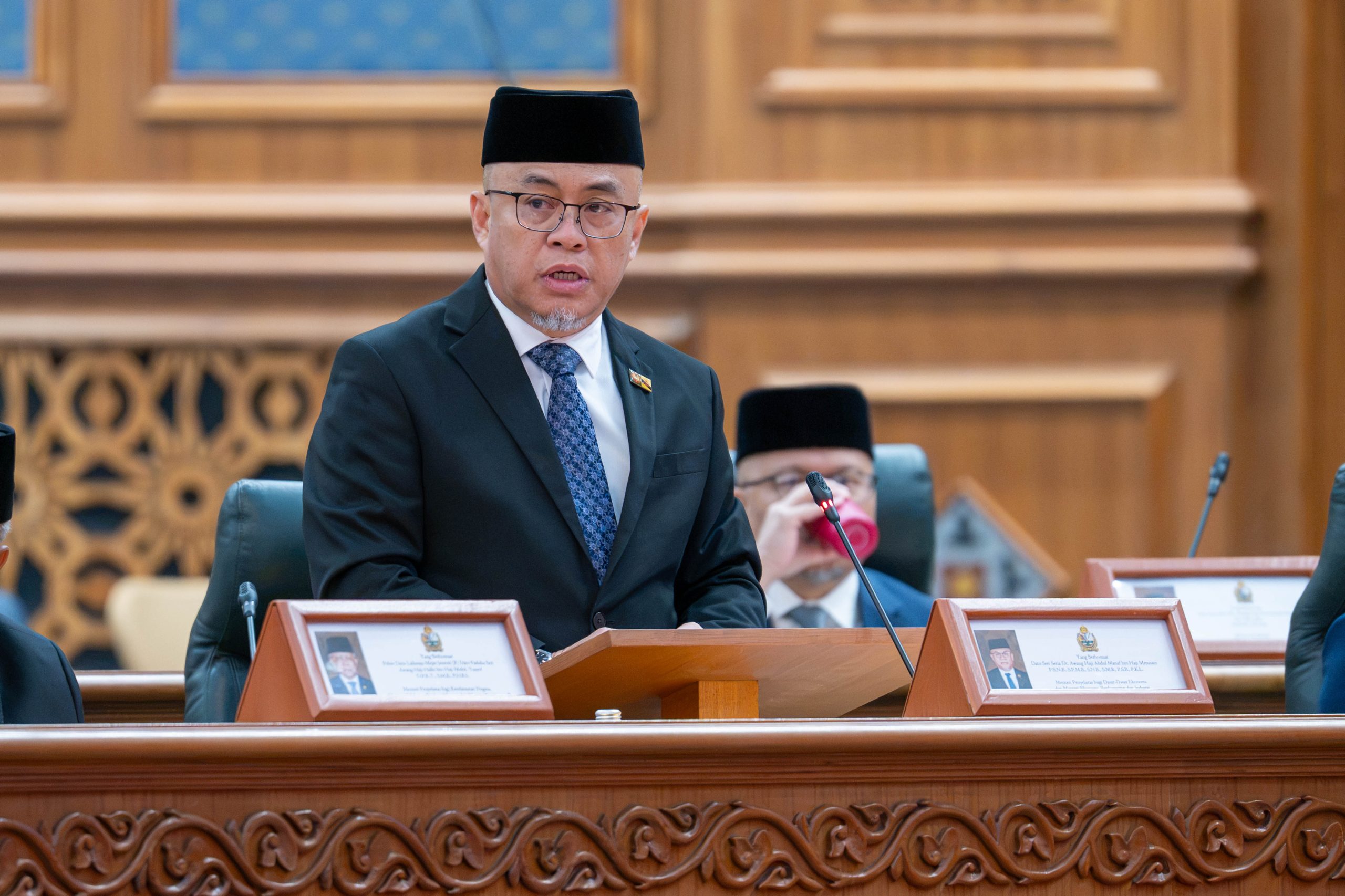
Coordinating Minister for Economic Policies and Minister of Economy, Trade and Industry Yang Berhormat Dato Seri Setia Dr Haji Abdul Manaf bin Haji Metussin in his speech in support of the motion of Coordinated Efforts towards achieving Brunei Vision 2035 yesterday, on the first day of the Second Meeting of the 22nd Legislative Council (LegCo) Session, highlighted the importance for Coordinating Ministers, together with the relevant ministries, to collaborate and work hand in hand for the well-being and interests of the people and residents of Brunei Darussalam, especially in the coordinating efforts to safeguard social security, harmony, and economic diversification together with the ministries entrusted to lead the priority sectors.
Regarding the country’s economic development, he shared, “From 2015 to 2025, the national economy recorded an average gross domestic product (GDP) growth of 0.7 per cent per year, with the non-oil and gas sector contributing growth of 2.7 per cent per year. This level of growth is still considered insufficient and requires further enhancement. Referring to the aspirations of Brunei Vision 2035, with approximately nine years remaining towards its achievement, he said, “Various initiatives and efforts have been undertaken by the relevant ministries and agencies to diversify the national economy. These efforts are particularly focused on the priority sectors namely Downstream Oil and Gas Sector; Food Sector; Tourism Sector; Information and Communications Technology (ICT) Sector; and Services Sector.”
To accelerate and drive economic growth through these priority sectors, he said “Greater efforts must be undertaken by all parties through a Whole-of-Government and Whole-of-Nation approach. The role of the coordinating minister is not to take over the responsibilities of advancing these priority sectors.
“However, as emphasised in the titah of His Majesty Sultan Haji Hassanal Bolkiah Mu’izzaddin Waddaulah ibni Al-Marhum Sultan Haji Omar ‘Ali Saifuddien Sa’adul Khairi Waddien, Sultan and Yang Di-Pertuan of Brunei Darussalam, the actual responsibility is to ensure that existing policies are aligned and able to support the advancement of these priority sectors.
“This coordination is expected to enable the development of priority sectors to be carried out more efficiently and effectively. Towards this objective, the Ministry of Economy, Trade and Industry will continue to work closely and monitor the progress of economic policy coordination across these sectors with the responsible ministries.”
He outlined, “Under the Economic Blueprint, several industry roadmaps and sectoral blueprints have been developed and are also currently being formulated by the relevant ministries, namely Under the Downstream Oil and Gas Sector is Downstream Oil and Gas Roadmap; Under the Food Sector is Food Industry Roadmap; Under the Tourism Sector is Tourism Industry Roadmap; Under the ICT Sector is Digital Economy Masterplan 2025; and Information and Communication Technology Roadmap while Under the Services Sector is Maritime Trade, Logistics and Services Roadmap; and Aviation Services Roadmap and Under the Financial Services Industry is Financial Sector Blueprint.
“All these sectoral blueprints and industry roadmaps serve as the foundation for policy coordination, which will support the effective and sustainable development of the national economy.”
To ensure that initiatives and efforts proceed as planned, he revealed, “Several coordinating groups have already been established under the existing roadmaps and frameworks.
“It is important for the role of these coordinating groups to be further strengthened, formalised, and elevated to the ministerial level where appropriate, to ensure that cross-sectoral issues can be addressed more effectively.
“This step is particularly important in addressing cross-cutting issues or issues that span across ministries, which often involve the jurisdictions, policies, and responsibilities of several ministries and relevant agencies simultaneously.
“Such issues cannot be effectively resolved if they are addressed separately or in silos. Therefore, a more structured coordination mechanism is required to ensure timely action, clear decision-making, and shared accountability.”
In addition, he highlighted “One of the key focuses in coordinating economic policies is to drive and monitor the development of micro, small and medium enterprises (MSMEs) so that they can contribute towards national economic growth.
“This takes into consideration that the majority of MSME ownership is held by local citizens, including youth and women, who are actively pursuing economic activities, including home-based and small-scale businesses. At the same time, this sector also has the potential to generate employment opportunities for local citizens in addressing unemployment issues. Through the coordination of these policies, it is hoped that the ecosystem supporting the growth and development of local MSMEs can be further improved.”
(news source: Borneo Bulletin ; pic source: Info Foto, Jbt Penerangan)