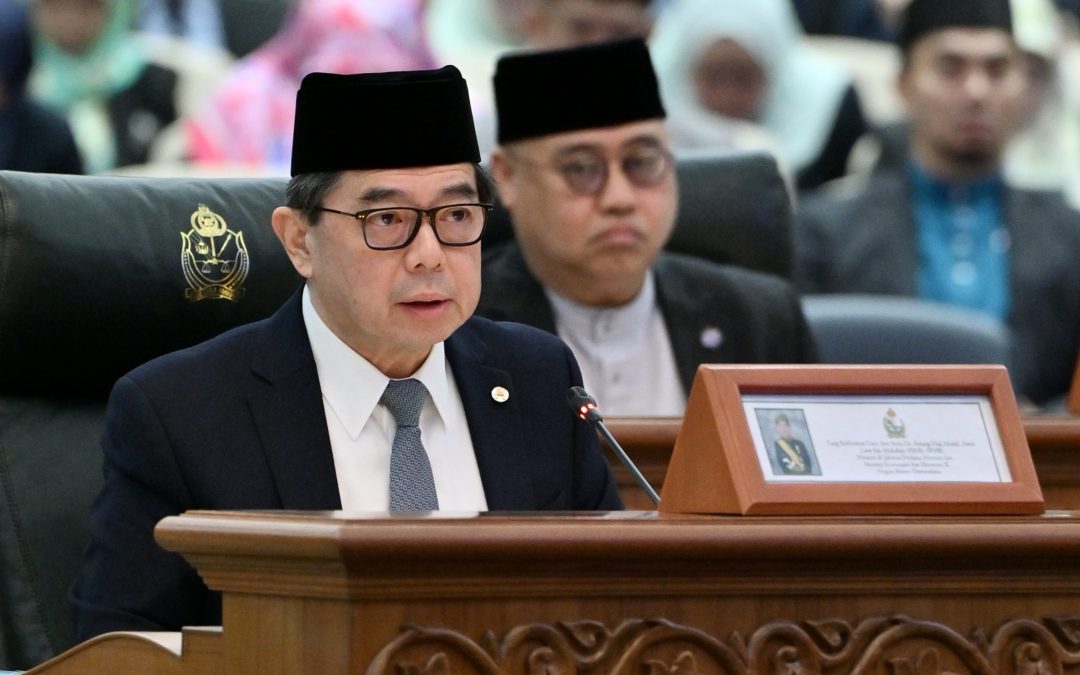
Several important challenges require serious attention to achieve Brunei Vision 2035 with one of the most significant being the emergence of global issues that could directly or indirectly affect the effectiveness of national policies and strategies, Legislative Council (LegCo) member Yang Berhormat Abdul Aziz bin Haji Hamdan underscored at the Second Meeting of the 21st LegCo Session yesterday.
He added that issues such as climate change, global economic uncertainty, rapid technological advancement, the influence of social media, and rising mental and social health concerns are not only reshaping the global landscape, but also indirectly impacting Brunei Darussalam’s social structure, community values, and economic resilience.
From the aspect of youth leadership and social issues among the younger generation, they are now among the main focuses in ensuring that the nation does not only produce a generation that is academically literate, but also a generation that is competitive, resilient and responsible to religion, race, and country.
“Therefore, in facing this challenge, it is a priority for all of us – policymakers, educational institutions, the public, and especially the youth – to play an active role together,” he said.
Brunei Vision 2035 will not be achieved only through good policies on paper, but demands inclusive, responsive implementation, and able to adapt to rapid global changes.
Recognising that youth are the backbone of the nation’s progress, efforts to guide and empower them must be a priority and there is a need to be more proactive, comprehensive and strategic.
Yang Berhormat Abdul Aziz mentioned proposed steps that can be taken for youth empowerment and development initiatives.
These include integrating identity education and national values into the education system to nurture morally upright, resilient, and globally aware youth; establishing district-level centres to support skills training, entrepreneurship, mental health, counselling, and social development; ensuring youth participation in decision-making through bodies such as the Mukim and village consultative councils, youth council and strategic government committees; promoting youth exchange programmes to build global perspectives while maintaining a strong Bruneian identity and values and formulating a national policy addressing emotional, identity and social challenges faced by youth, especially in the digital and post-pandemic era.
In the current Employment Situation Analysis in the Social Blueprint, the unemployment rate decreased from 7.3 per cent in 2020 to 5.1 per cent in 2023 with the three highest-record employment areas being services and sales, basic jobs, and professionals, while public administration, wholesale and retail trade, and construction are the three highest-performing economic activities.
Although there is a decline in the rate of unemployment, the balance between basic and professional jobs needs to be addressed, so that the younger generation is not only focused on temporary or low-skilled jobs. Investment in technical and digital training and education must continue.
While living in an era shaped by rapid technological change, particularly through the rise of artificial intelligence, automation, and the digital economy offer many benefits, they also pose serious challenges, especially in terms of youth employment.
Traditional job fields are increasingly under threat, while new jobs require very different skills. If this is not addressed urgently and strategically, there will be a large gap between the available youth workforce and the actual demand of future industries, potentially undermining targets to achieve Brunei Vision 2035.
To overcome this challenge, several important steps should be taken, like strengthening technical education and digital skills; developing a future curriculum in schools; public-private partnership in industrial training; support for youth digital entrepreneurship and increased awareness and early exposure.
“Technological change is inevitable. However, what is important is how to equip youth with the knowledge, skills and confidence to adapt and seize opportunities in this new world,” he said.
(News source: Borneo Bulletin)