As Brunei Darussalam continues its journey toward achieving Brunei Vision 2035, the effectiveness of public service delivery and the nation’s ability to tackle social challenges remain central to the country’s progress.
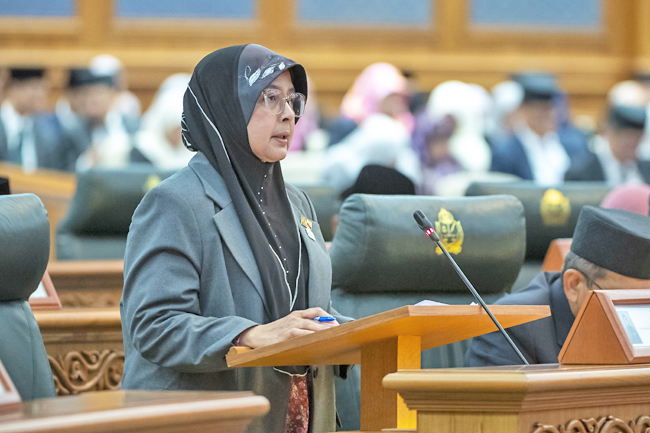
During the Second Meeting of the 21st Legislative Council (LegCo) Session on Monday, LegCo member Yang Berhormat Hajah Safiah binti Sheikh Haji Abdul Salam delivered a comprehensive and impassioned address, highlighting the need for stronger institutional reforms, improved accountability and inclusive strategies to uplift the well-being of the people.
From declining public sector performance to growing concerns over social dependency and rising societal issues, she offered concrete suggestions aimed at strengthening the machinery of government and ensuring no citizen is left behind.
PUBLIC SERVICE AS THE FRONTLINE OF GOVERNMENT
Yang Berhormat Hajah Safiah emphasised that public service is more than just implementing policies. It is “the face of the government to the people and the driving force of the country’s administration”.
She warned that “without efficient and responsive delivery, even the best policies or plans will not impact people’s lives… some may be disappointed”. To avoid this, she called for public service to uphold the highest standards of efficiency, integrity and competitiveness.
She cited the 2023/2024 Public Sector Performance Grading Assessment (3PSA), which showed a decline in government agency performance. Only two agencies (four per cent) earned four stars for ‘Very Good’ performance, while over half – 26 agencies (54 per cent) – were rated at the lowest level, ‘Needs Improvement’.
In light of this, she questioned whether an assessment has been carried out on the effectiveness of existing strategies and the causes of the decline, as well as what action plan will be taken next to ensure the quality of public services reaches an excellent level before 2035.
DISCONNECT BETWEEN POLICY AND PUBLIC EXPERIENCE
While the LegCo member commended the government’s efforts to strengthen public service, she warned that the Public Service Modernisation Plan must bridge the gap between well-designed policies and the actual experience of citizens.
She highlighted public frustration over extensive bureaucracy, information not easily accessible, and systems both physical and digital that are not user-friendly, especially for vulnerable groups.
Yang Berhormat Hajah Safiah proposed four major areas of reform to strengthen Brunei’s public service delivery and bring it in line with the needs of the people.
Reform of civil service work culture – Promote the ethic: ‘Civil Servants Are Facilitators – Serving the People and Giving Their Best’.
Strengthening the 3PSA evaluation methods – Introduce regular cross-agency health checks, performance tracking based on productivity and outcomes, and create public dashboards on agency performance.
Empowering key institutions – Enhance the roles of the Service Management Department and Civil Service Institute as the custodians of service excellence.
Digital inclusivity – Ensure that the digitisation of public services are “friendly and inclusive, easy, simple and accessible to all levels of society”.
She supported the government’s move to adopt results-based performance evaluations and stressed the importance of transparency.
“Introduce a feedback mechanism by making citizens’ feedback the main input in improving policies in the service,” she said.
She also noted, “We need to realise that not all citizens evaluate policies through documents – but more people evaluate them through their experiences at the counter, digital portals and in communication.”
The plan, she concluded, must be implemented “with one voice, one system, and one heart”.
ADDRESSING SOCIAL DEPENDENCY
Citing the Brunei Darussalam Social Blueprint, Yang Berhormat Hajah Safiah revealed that as of April 2024, over 10,000 people were receiving monthly assistance, and 73 per cent of them were healthy and able to work. She pointed to deeper structural issues:
“This dependency… is not only a lack of income, but also a result of challenges such as childcare, transportation and lack of work skills.” She warned that long-term vulnerability can also shape damaging mindsets. She questioned whether current welfare approaches truly enable social mobility or merely manage short-term needs.
To better serve vulnerable populations, she called for the transformation of the National Welfare System (SKN) into SKN 2.0 – a more responsive and integrated digital platform.
Key proposals include:
– Social profiling based on income, skills and willingness to work
– Real-time tracking via a Social Mobility Dashboard
– Flexible employment options, particularly for women, single mothers, and people with disabilities
Moreover, Yang Berhormat Hajah Safiah called for the National Council for Social Issues (MKIS) to be empowered as a national reference body with greater involvement from civil society and the private sector.
She proposed that MKIS coordinate the rollout of SKN 2.0, facilitate digital community engagement, and establish one-stop empowerment centres offering training, career counselling and childcare.
MKIS should also provide transparent social reporting and implement a “graduation model” to help assistance recipients’ transition towards independence through wage subsidies, micro-loans and savings schemes, fostering long-term self-reliance and reducing social dependency.
Yang Berhormat Hajah Safiah also raised concerns over growing social issues backed by worrying statistics such as the 14.6-per-cent increase in recidivism among ex-convicts; 60 per cent of drug offenders are repeat offenders, and 52 per cent are unemployed; 1,127 cybercrime cases in 2022; 91-98 per cent rise in HIV cases between 2019 and 2023, mostly among men; 72 per cent increase in births out of wedlock among Malay Muslims; and a rise in parental neglect cases.
To respond to these, she advocated for a unified, cross-sectoral strategy.
“An integrated approach is urgently needed, encompassing social interventions, enforcement of civil and Syar’ie laws, the active involvement of grassroots leaders, namely penghulus and village heads, the public, and through the appreciation of Malay Islamic Monarchy (MIB) values.”
A CALL FOR UNITY TOWARDS NATIONAL GOALS
In closing, Yang Berhormat Hajah Safiah reminded that Bangsa Brunei Cemerlang is “not just an ideal, it is a reality formed through a system that must be brought to life as a national agenda”.
She stressed that Brunei Vision 2035 must be translated into action through “integrated policies by all parties, guided by a transparent, inclusive and high-impact timeline, service delivery and monitoring of social gaps”.
She expressed full confidence in the Pejabat Wawasan at the Prime Minister’s Office, saying it plays a crucial role as the main coordinator of the country’s policies and aspirations.
(News source: Borneo Bulletin)