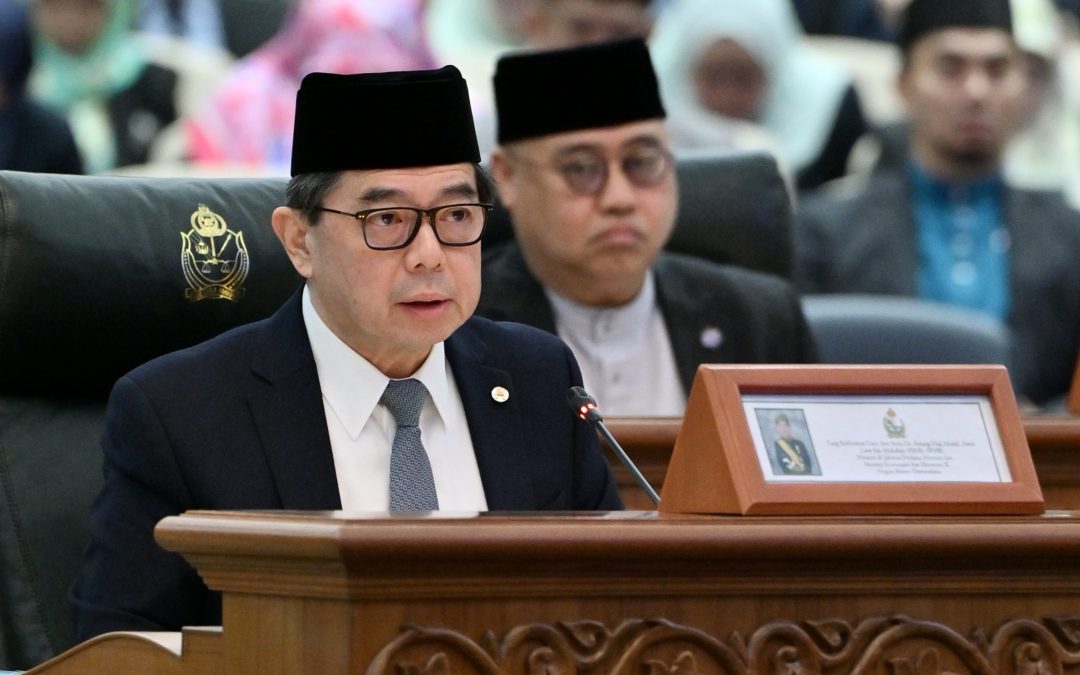
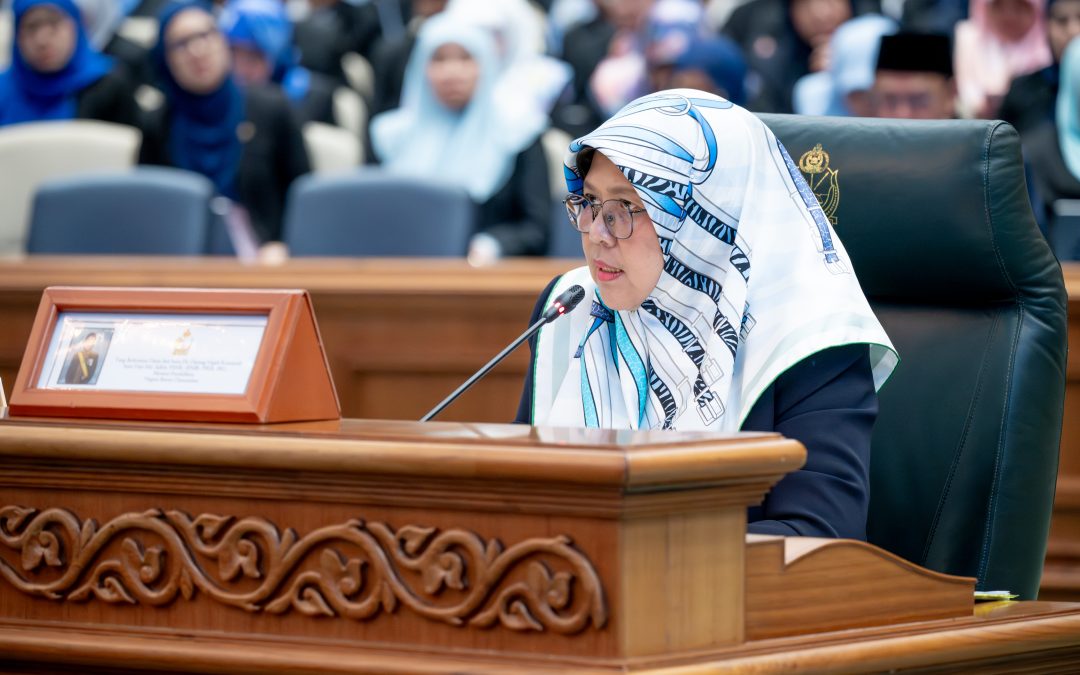
The challenges of the coming decade leading up to 2035 require a collective commitment, not only from the council but also from all key stakeholders, including the public service, private sector, non-governmental organisations and all levels of the Sultanate’s population in upholding His Majesty Sultan Haji Hassanal Bolkiah Mu’izzaddin Waddaulah ibni Al-Marhum Sultan Haji Omar ‘Ali Saifuddien Sa’adul Khairi Waddien, Sultan and Yang Di-Pertuan of Brunei Darussalam’s titah in realising Brunei Vision 2035.
Legislative Council (LegCo) member Yang Berhormat Pehin Orang Kaya Johan Pahlawan Dato Seri Setia Awang Haji Adanan bin Begawan Pehin Siraja Khatib Dato Seri Setia Haji Mohd Yusof highlighted this during the Second Meeting of the 21st LegCo Session on Monday.
He pointed out several issues as constructive contributions and added value for due consideration in efforts to strengthen the framework of all three blueprints after having studied and reviewed their documents.
One of the key challenges identified in the Manpower Blueprint is the need to plan for 6,000 to 7,000 graduates entering the workforce each year.
However, data from JobCentre Brunei as of June 30, shows there are 13,710 active job seekers – with youth unemployment at 16.8 per cent, including 5,033 university graduates holding at least a Bachelor’s degree.
This highlights a gap between the education system and actual industry needs, including mismatches in programmes and skill sets.
Yang Berhormat Pehin Orang Kaya Johan Pahlawan Dato Seri Setia Awang Haji Adanan inquired whether a comprehensive audit of the education system and its programmes had been conducted to ensure alignment with current and future industry and national needs, with the aim of improving employment prospects
He suggested that the authorities monitor the Graduate Career Matching Platform and strengthen systematic planning by identifying key skill areas in education and apprenticeship programmes such as SKiPPA and i-Ready.
He proposed that individuals who meet service criteria and demonstrate excellent performance be offered permanent employment to address brain drain and optimise professional talent.
These should be complemented by value-added upskilling and reskilling efforts aimed at developing a more responsive and results-oriented human capital. According to the blueprint, 3,849 individuals were categorised as NEET (Not in Employment, Education or Training) in 2021 and are deemed unproductive and at risk of becoming a generational poverty liability. He suggested establishing alternative pathways such as work-based learning provided by stakeholders in collaboration between public sector, specifically education institutions, industry, private sector and non-governmental organisations, to broaden employment prospects.
He also inquired about effective approaches for implementing all three Blueprints, particularly the Social Blueprint, in ways that embody and internalise Maqasid Syariah as a foundational principle, with the aim of guiding adjustments to strategic outcomes and the direction of administrative policies.
The LegCo member also asked whether assessment or indicator applied is in accordance with international best practices such as Gini Coefficient for measuring income/wealth inequality.
Despite extensive assistance provided through the National Welfare Scheme (SKN) and zakat distributed by the Zakat, Waqaf and Baitulmal Management Department (JUZWAB), dependency on government aid remains high.
As of April 2024, around 7,375 out of 10,041 aid recipients were able-bodied and capable of working.
“What effective measures, beyond current programmes, can be introduced to lift these individuals out of poverty?” he asked.
Yang Berhormat Pehin Orang Kaya Johan Pahlawan Dato Seri Setia Awang Haji Adanan also said based on the ASEAN Investment Report 2024, the Sultanate’s foreign direct investment (FDI) dropped from USD0.3 billion (2022) to USD0.1 billion (2023), the lowest in ASEAN.
Realising the importance of FDI as a major economic driver and bringing spin-offs and multiplier effects, the country must act more aggressively and strategically, innovative and competitive to attract quality, high-tech investors and bring significant impact, he said.
(News source: Borneo Bulletin)