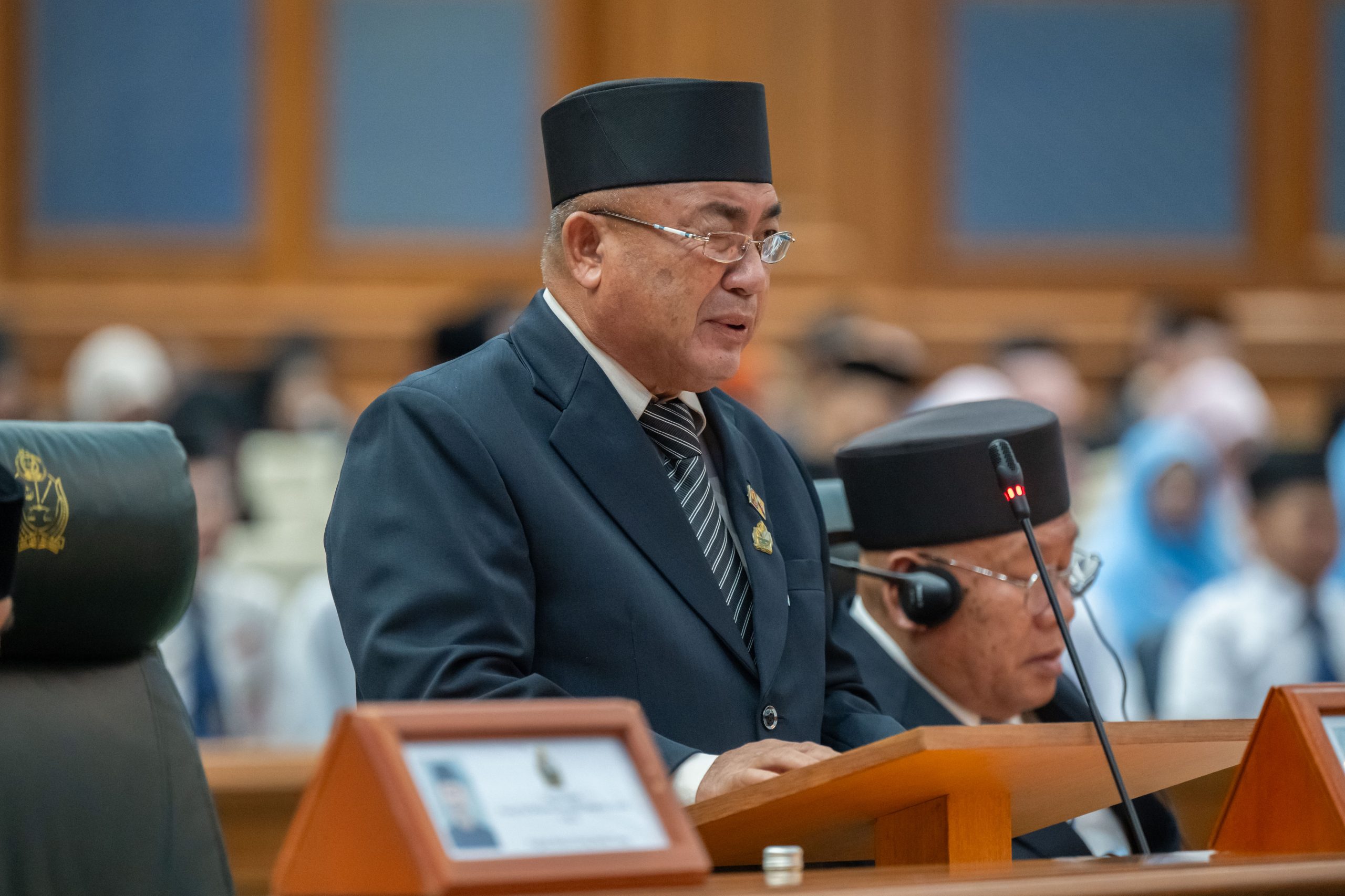
Strengthening coordination across ministries and agencies is essential to expanding employment opportunities for Bruneians and reducing unemployment, with the private sector playing a central role in achieving the goals of Brunei Vision 2035, said Legislative Council (LegCo) member Yang Berhormat Mohammad bin Abdullah @ Lim Swee Ann in his motion during the Second Meeting of the 22nd Session of the LegCo.
Expressing his appreciation to His Majesty Sultan Haji Hassanal Bolkiah Muʼizzaddin Waddaulah ibni Al Marhum Sultan Haji Omar ‘Ali Saifuddien Sa’adul Khairi Waddien, Sultan and Yang Di-Pertuan of Brunei Darussalam, for the establishment of coordinating ministers, Yang Berhormat Mohamad said the initiative reflects His Majesty’s foresight in ensuring government policies and development programmes are implemented in a more organised, integrated and effective manner.
He noted that employment is a cross-cutting issue involving education, training, workforce development, investment, economic growth, financing, workers’ welfare and the private sector, making coordinated leadership crucial to aligning these sectors under a common national agenda.
Yang Berhormat Mohamad highlighted that coordinating ministers could help ensure education and training programmes meet industry requirements, investments generate quality employment, and the private sector becomes a stronger strategic partner in creating sustainable career opportunities for local talent.
He also referred to His Majesty’s call for a “migration of mindset,” encouraging Bruneians to move from waiting for opportunities to actively seeking work, becoming more self-reliant and embracing careers in the private sector.
However, he stressed that this shift must be mutual, with private companies also offering more attractive salaries, better welfare, safer working environments and clearer career progression. “The private sector should not be viewed as a second choice but as a viable and rewarding long-term career pathway for local workers,” he said.
To strengthen workforce development, he proposed the consideration of an Integrated Local Employment Plan, bringing together education, skills training, job matching, employer incentives, upskilling initiatives and worker welfare into a unified national framework.
He pointed to international best practices, citing Singapore’s Skills-Future initiative, which integrates lifelong learning, upskilling, career guidance and employer support, as well as the country’s Work-Study Programme, which combines employment with structured training and workplace learning. He also highlighted Malaysia’s PERKESO Employment Insurance System, which provides temporary income support, job placement services and skills training for unemployed workers. These examples demonstrate that employment systems should not merely focus on filling vacancies but on helping individuals secure jobs, retain employment and build sustainable careers.
He stressed that unemployment should be viewed not only in terms of the number of job seekers but also through issues such as skills mismatches, salary expectations, career pathways, employee welfare and workplace conditions.
Yang Berhormat Mohamad also proposed that every investment and development project should be assessed based on its impact on local employment by examining the number of jobs created, opportunities provided for Bruneians, skills transferred and the long-term career prospects generated.
“Investment should be measured not only by the amount of capital brought into the country but also by the value it adds to the local workforce and economy,” he said.
He added that increasing quality employment for locals would strengthen household incomes, boost purchasing power, support business growth and contribute to a more resilient economy, making unemployment reduction both a social and economic priority.
On poverty alleviation, he welcomed the government’s targeted assistance programmes but emphasised that aid should serve as a bridge towards greater self-sufficiency through employment, skills development, entrepreneurship and sustainable income generation. He said stronger coordination among ministries and agencies would ensure assistance programmes are better targeted, avoid duplication and deliver measurable outcomes.
He said the success of Brunei Vision 2035 should not be measured solely by economic growth, but also by the extent to which Bruneians benefit from development through quality employment, higher incomes and stronger participation in the private sector.
(news source: Borneo Bulletin ; pic source: Info Foto, Jbt Penerangan)