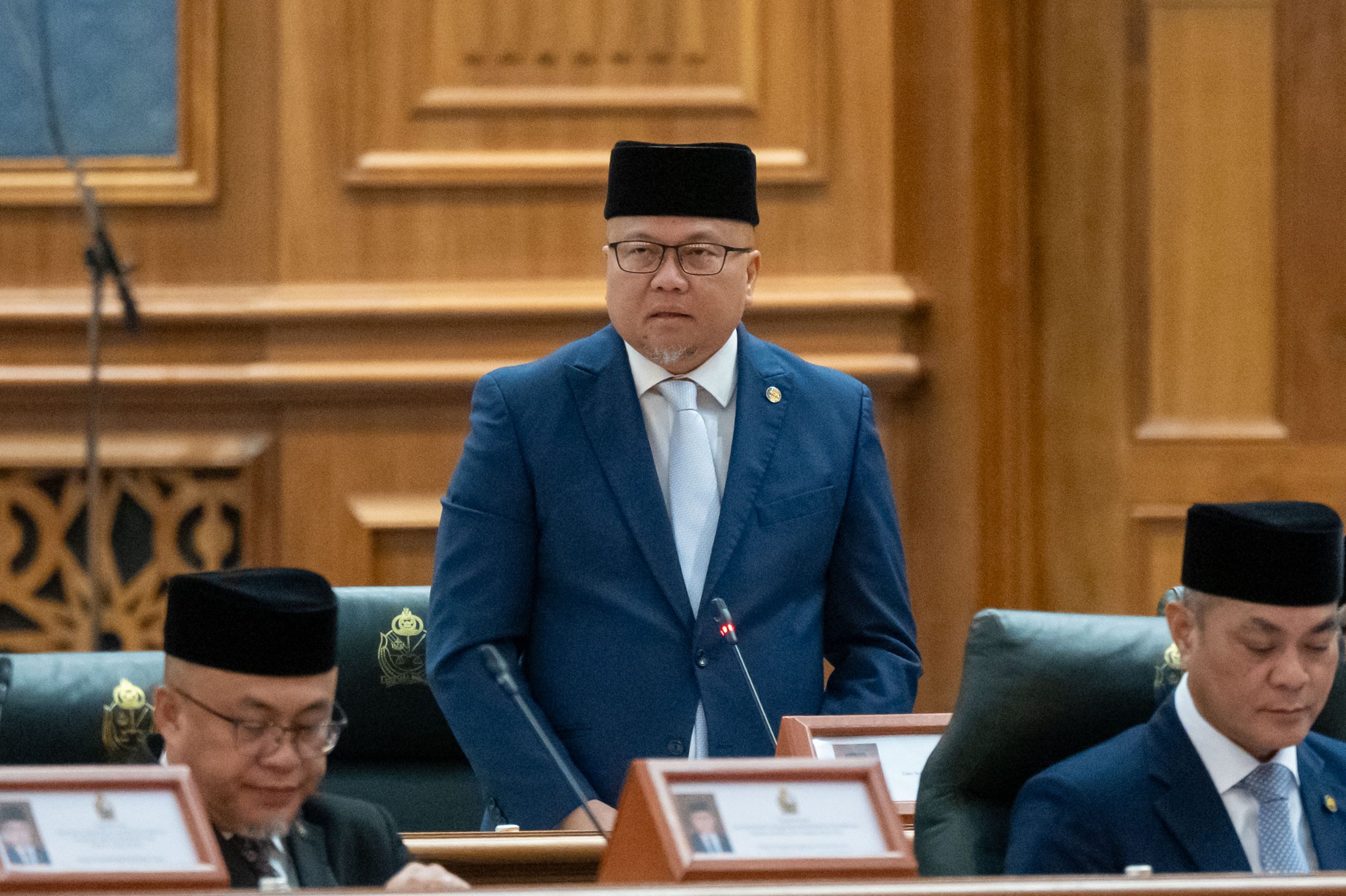
The ministry is currently developing the BruMAP NCD-MH 2026–2035, with the support of the World Health Organization, as a long-term strategic plan to strengthen the prevention, early detection, treatment and management of non-communicable diseases (NCDs), said Minister of Health Yang Berhormat Dato Seri Setia Dr Haji Mohd Isham bin Haji Jaafar.
He said this during the Second Meeting of the 22nd Session of the Legislative Council (LegCo) in response to a question by LegCo member Yang Berhormat Pehin Orang Kaya Indera Pahlawan Dato Seri Setia Awang Haji Suyoi bin Haji Osman on measures to reduce the mortality rate caused by NCDs.
The minister explained that NCDs continue to be one of the Ministry of Health’s (MoH) strategic priorities, as NCDs remain the leading contributor to the burden of morbidity and mortality while also increasing the demand for healthcare services.
Measures to reduce mortality from NCDs include the ministry’s approach, which covers the entire continuum of care, including health education, prevention, early detection, treatment, rehabilitation and ongoing (continuous) care.
Priority is also being given to health education and promotion in schools, workplaces and communities; screening and early detection programmes; strengthening primary healthcare services; adopting a whole-of-government and whole-of-society approach; and creating an environment that supports healthy lifestyle practices. “The MoH places a strong emphasis on prevention and early detection, as these measures not only help reduce mortality from NCDs, but also minimise disease complications, improve patients’ quality of life, and reduce the need for more complex and costly treatment in the future,” he said.
The MoH, he mentioned, “continues to strengthen the capacity of the healthcare system through strengthening primary healthcare services; improving coordination between screening services, chronic disease management, hospitals and specialist services; and leveraging data and digital technologies, such as BruHealth and Bru-HIMS 2.0, to support capacity planning and enhance the quality of healthcare service delivery.”
On budget allocation for addressing NCDs, Yang Berhormat Dato Seri Setia Dr Haji Mohd Isham shared, “it covers a wide range of healthcare services, including health education, health promotion, prevention, screening, diagnostic testing, treatment, medications, rehabilitation and specialist services. As such, it is difficult to separately identify expenditure specifically allocated to prevention and treatment, as the majority of healthcare programmes and services are delivered in an integrated manner that simultaneously supports both aspects. This includes the implementation of screening programmes, the delivery of primary healthcare services, follow-up treatment, health education and chronic disease management, all of which contribute concurrently to the prevention, early detection, treatment and management of NCDs.”
However, he added, “The ministry is of the view that investing in prevention, early detection and effective disease management is the most effective approach to reducing disease-related complications, lowering hospital admissions, reducing the need for more complex treatments, and ensuring a more efficient and sustainable use of healthcare resources in the long term.” He also emphasised that the MoH will continue to strengthen its efforts to prevent and control NCDs through a comprehensive, evidence-based approach involving the whole of government and the wider community.
The ministry’s goal, he said, “is to reduce the burden of NCDs, improve the quality of life of the population, and ensure that the nation’s healthcare system remains sustainable in meeting the needs of both present and future generations.”
Yang Berhormat Dato Seri Setia Dr Haji Mohd Isham also responded to a question by LegCo member Yang Berhormat Zainol bin Mohamed, who proposed that the ministry considers adopting a more community-based approach to the management of NCDs through a long-term programme that integrates health monitoring, group physical activities, the use of digital technology and recognition of participants’ achievements.
The proposed approach, the minister explained, “has already been and continues to be implemented by the MoH through various initiatives that integrate health monitoring, community engagement, the use of digital technology and the continuous encouragement of behavioural change.”
Among the ministry’s key initiatives are the National Health Screening Programme (NHSP) via BruHealth, where nearly 8,000 health risk assessments were conducted between January and June 2026; more than 6,500 individuals were identified as requiring further health screening; and nearly 1,600 screening appointments were successfully booked through BruHealth.
The BruHealth Health Index, where more than 122,000 health assessments have been submitted by users, has enabled more personalised health monitoring.
BN on the Move, he shared, recorded 17.55 billion steps between January and June 2026, engaged between 29,000 and 33,000 active users each month, and uses gamification and digital rewards to encourage physical activity.
Another initiative is the HEAL (Healthy Environment and Lifestyle) Programme, which has involved more than 2,200 participants through community-based activities focused on healthy eating, physical activity, mental health and tobacco prevention.
The MoH, he highlighted, “has previously implemented the Mukim Sihat Programme in several sub-districts (mukim) and villages as an initiative to empower local communities to adopt and sustain healthy lifestyles. The programme focuses on behavioural change and the long-term sustainability of healthy practices, while encouraging ownership by Mukim and Village Consultative Councils in leading health promotion activities, with continued support from the MoH. The effectiveness of this approach is reflected in the growing number of community-led health initiatives across the country, including walkathons and fitness programmes organised independently by local communities.”
Through the BALANCE Programme for Diabetes Patients, he revealed that more than 80 per cent of participants who completed the programme demonstrated improved HbA1c control, indicating better diabetes management.
The ministry will continue to strengthen the use of BruHealth as an integrated platform for risk assessment, screening, health monitoring, health challenges and chronic disease management.
He said, “The MoH will continue to strengthen the use of digital technology, community engagement and data-driven approaches to increase public participation in the prevention and management of NCDs. The ministry’s goal is not only to reduce the burden of NCDs, but also to empower individuals to take a more active role in managing their own health, towards building a society that is healthier, more productive and enjoys a higher quality of life.”
(news source: Borneo Bulletin ; pic source: Info Foto, Jbt Penerangan)