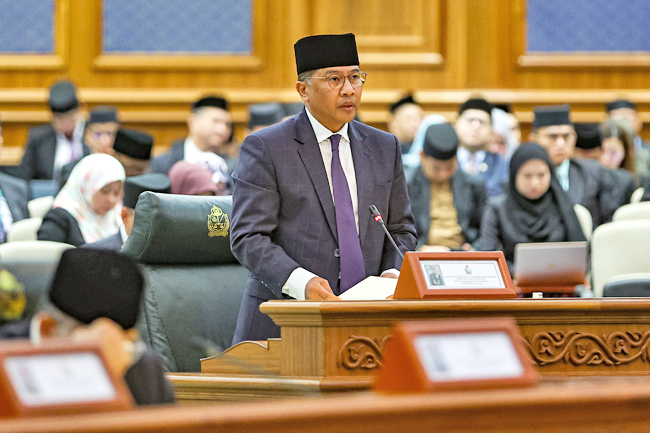
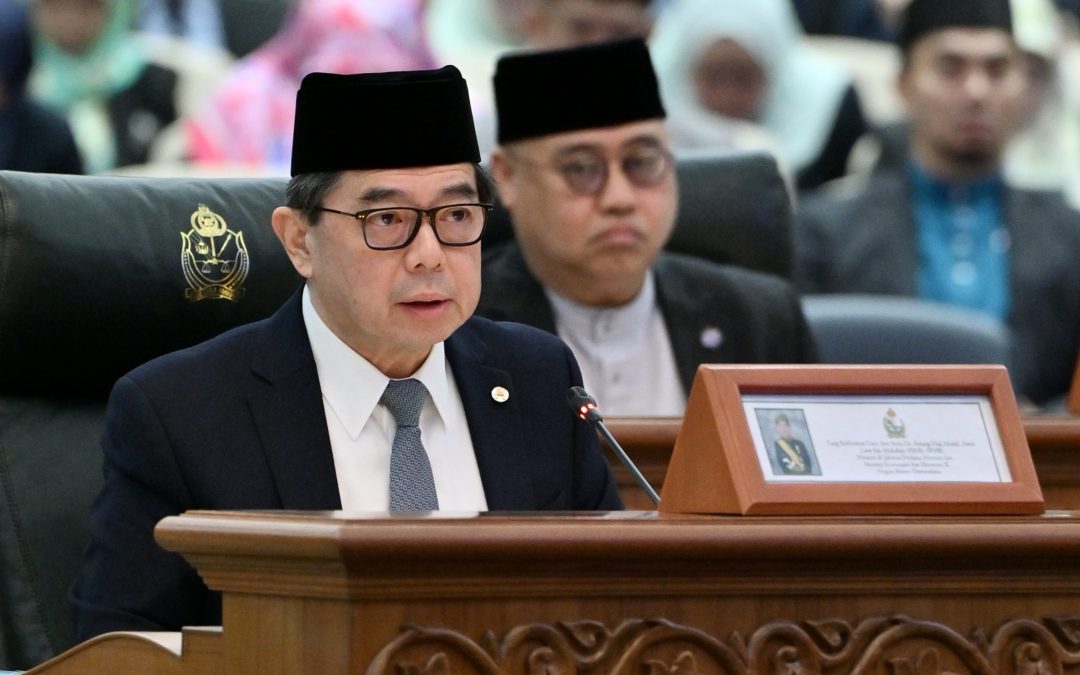
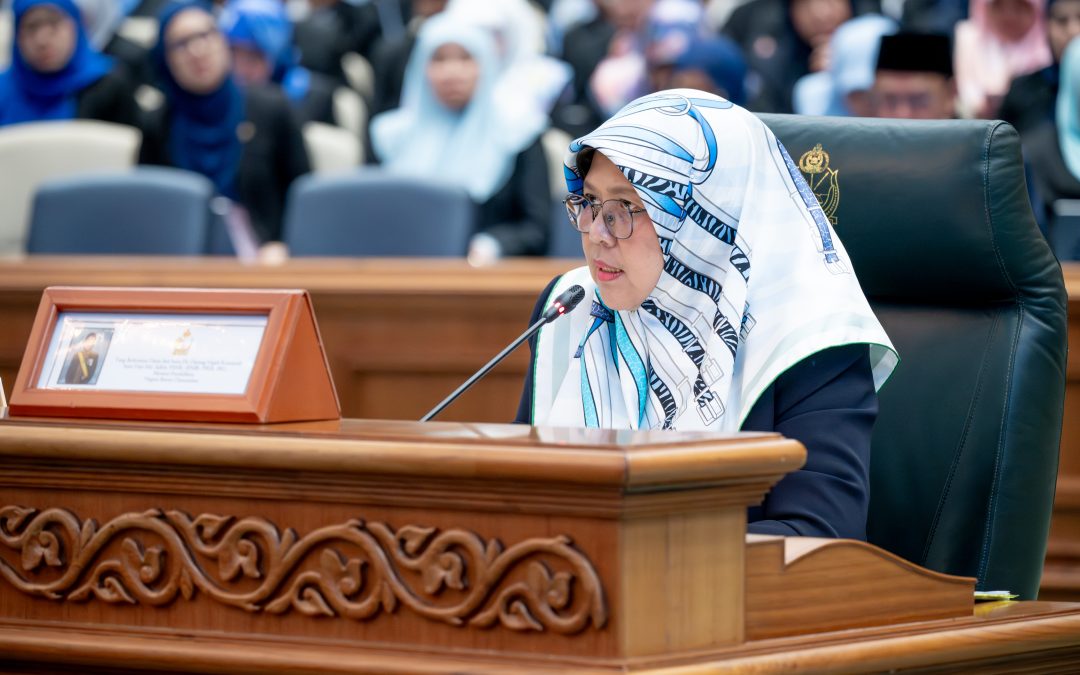
“We need to move in the same direction, row together and embark on a common voyage towards the destination (Vision). This includes ensuring sustainable national development, prioritising important matters and being able to balance long-term growth and development with financial and expenditure positions,” said Minister of Transport and Infocommunications Pengiran Dato Seri Setia Shamhary bin Pengiran Dato Paduka Haji Mustapha.
The three existing blueprints are dynamic and not exhaustive guides and require active involvement from all parties with each party playing an important role in contributing to capacity development, innovation, and policy effectiveness, to together build a balanced and resilient future, he said at the Second Meeting of the 21st Legislative Council yesterday.
The Ministry of Transport and Infocommunications (MTIC) also plays a comprehensive role, including providing support to various sectors, including capacity development through the Manpower Industry Steering Committee (MISC) initiative, enhancing the digital ecosystem, social development through connectivity and mobility aspects, and contributing to economic growth in terms of providing services and logistics facilities.
The minister shared some indicative matters regarding the contribution of MTIC towards supporting the desired goals by 2035 where one is the National Development Plan (RKN).
He shared the direction for the preparation of programmes and projects under RKN12, in which the ministry also plays an important role. Strengthening National Security and Resilient People’s Well-being; Increasing the Contribution of the Non-Oil and Gas Sector to the National Economy; and Strengthening Government Management for an Efficient and Conducive Public Administration. MTIC has 21 projects under RKN12 aimed at increasing sustainable economic growth and improving the well-being of the people, which include initiatives related to digital transformation contributing to increasing innovation and productivity levels through the use and transition to digital.
Meanwhile nine projects are also aimed at strengthening national security and resilient well-being of the people by emphasising national sovereignty and stability, prioritising the people’s well-being and welfare.
Meanwhile projects also aim to improve meteorological systems; upgrade systems and equipment to ensure safety and security at the Brunei International Airport; and provide and upgrade public transport infrastructure.
With the ‘Request For Proposal’ (RFP) to provide, operate, manage and maintain public transport services in Brunei Darussalam opened to interested companies, the minister said the ministry through the Land Transport Department (JPD) has received 14 proposals and an Evaluation Committee has been established to evaluate the RFP.
To increase the contribution of the non-oil and gas sector to the national economy, the ministry’s main focus is related to the contribution of the information and communications technology (ICT) sector to GDP and also the services sector, especially air and sea cargo movement as contained in the Economic Blueprint. In addition, science, technology and innovation (STI) studies and the CREATES Research Fund are also part of the projects identified.
Another target is to strengthen government management for efficient and conducive public administration, where 10 projects have been approved for implementation by the ministry.
The projects are Public Transport System, Smart Transport System; Digitalisation of Land Transport Services; GOV.BN 2.0; Analytical Data as a Service; and Records Management System.
Among the key performance indicators (KPIs) at the ministry level that also contribute to the Economic Blueprint and further support Goal 3 of Brunei Vision 2035 are significant increases in terms of: Air passenger movements, which increased from approximately 1.2 million in 2023 to almost 1.5 million in 2024.
Among the factors contributing to this positive increase are the additional number of airlines operating, as well as the increase in the number of destinations and flight frequencies at Brunei International Airport.
An increase in the volume of sea cargo from approximately 33.8 million tonnes in 2023 to 38.6 million tonnes in 2024.
This increasing trend is driven by significant contributions from the oil and gas and downstream sectors, including a surge in conventional cargo.
The minister noted that as an ongoing effort of the ministry, the new MTIC Strategic Plan 2026 – 2030 will also remain aligned with Brunei Vision 2035, National Blueprints, Industrial Roadmaps and also the Key Sector Master Plan, as well as Sustainable Development Goals.
This, added the minister, is to ensure that the sectors under this ministry will continue to contribute to achieving the country’s targets by 2035, particularly in improving the quality of life of the people and making Brunei Darussalam a competitive and resilient country.
(News & pic source: Borneo Bulletin)