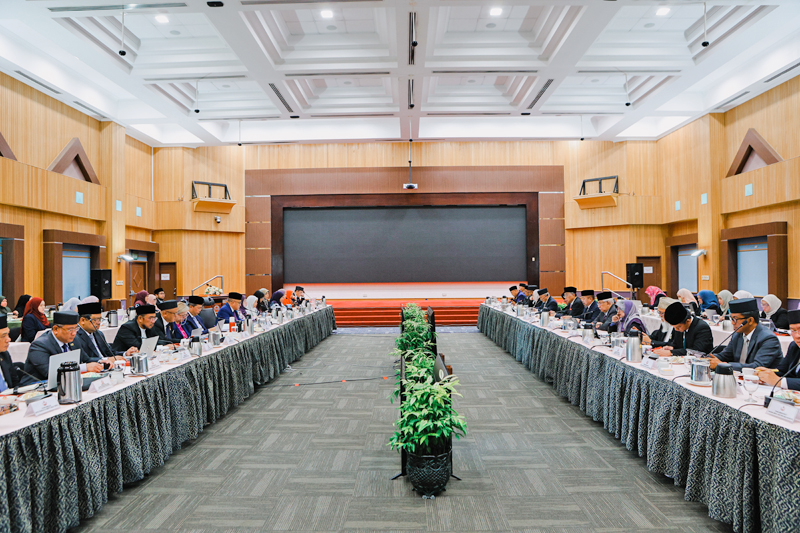
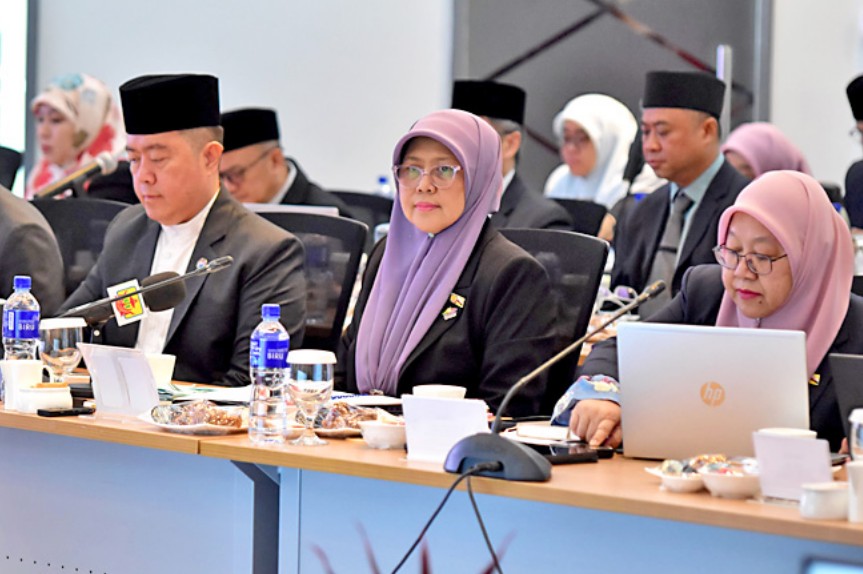
The education sector plays a vital role in realising the three main goals of Brunei Vision 2035, said Minister of Education Yang Berhormat Datin Seri Setia Dr Hajah Romaizah binti Haji Mohd Salleh during the Second Meeting of the 21st Legislative Council Session yesterday.
“Alhamdulillah, in less than one decade, Brunei Darussalam will move into 2035 – a year of significance as it marks a milestone in measuring the extent to which the nation’s aspirations under Brunei Vision 2035 have been achieved,” she said.
The first goal of Brunei Vision 2035 is to produce educated, highly skilled and accomplished people, and to achieve this goal, she shared “two national key outcomes have been identified and detailed through six national key performance indicators”.
A comprehensive manpower development master plan, Manpower Blueprint has also been developed and served as a foundation for planning and coordinating the nation’s human capital development to ensure alignment with the actual needs of the job market.
Efforts to achieve the goals has brought about changes. The National Education System for the 21st Century (SPN21), introduced in 2008, has shaped and contributed to the development of education through strategic initiatives, and introduced three changes.
The minister said the first change is on structure of the education system, a restructuring of the learning pathways to be more responsive to students’ abilities and interests, as well as job market demands.
The second change, she shared “is on curriculum and assessment where this change involves updating content and teaching methods to focus more on the development of 21st-Century skills.
The third change is the transformation of Technical and Vocational Education and Training (TVET) toward the creation of a dynamic and industry-oriented TVET system”.
Since the introduction of SPN21, she mentioned that “the Ministry of Education through four strategic plans, has prioritised nine initiatives. The first initiative is on strengthening teaching and learning”.
The second initiative is on the development of a relevant and inclusive curriculum and assessment, including special education and early childhood education.
The third initiative is the professional development programmes for school leaders and educator. This led to an increase in the percentage of teachers achieving Grade 4 and above – from 20.99 per cent (2020) to 44.4 per cent (2024).
The fourth initiative is on the teacher recruitment programmes, where the evaluation, selection, and support processes for teacher recruitment have been enhanced through the immersion and apprenticeship programmes.
The fifth initiative, she shared is on the “Teaching Service Scheme (SPG) and the Academic Staff Service Scheme (SPTA)”.
Meanwhile, the sixth initiative is on strengthening educational infrastructure towards a conducive, sustainable, and digital learning environment, whereby among the improvements made are infrastructure management using facility management; construction and improvement of educational infrastructure; digital transformation; school network infrastructure upgrade; and green infrastructure and sustainable education projects.
The seventh initiative is the development of educational frameworks for diverse learning approaches, such as frameworks for special education, financial literacy, and early childhood education,
The eighth initiative is the development of industry-relevant programmes, such as the provision of incubation and start-up entrepreneurship support programmes; practical training (internship) programmes and career workshops; integration of artificial intelligence, augmented reality/virtual reality, and modern technologies for individualised and hands-on learning; alignment of TVET programmes with industry needs.
The ninth initiative is internationalisation (globalisation and student mobility), including cross-agency and community collaborations; ASEAN platforms for mobility and policy alignment; and active participation in regional and international networks and organisations, she said.
(News source: Borneo Bulletin)