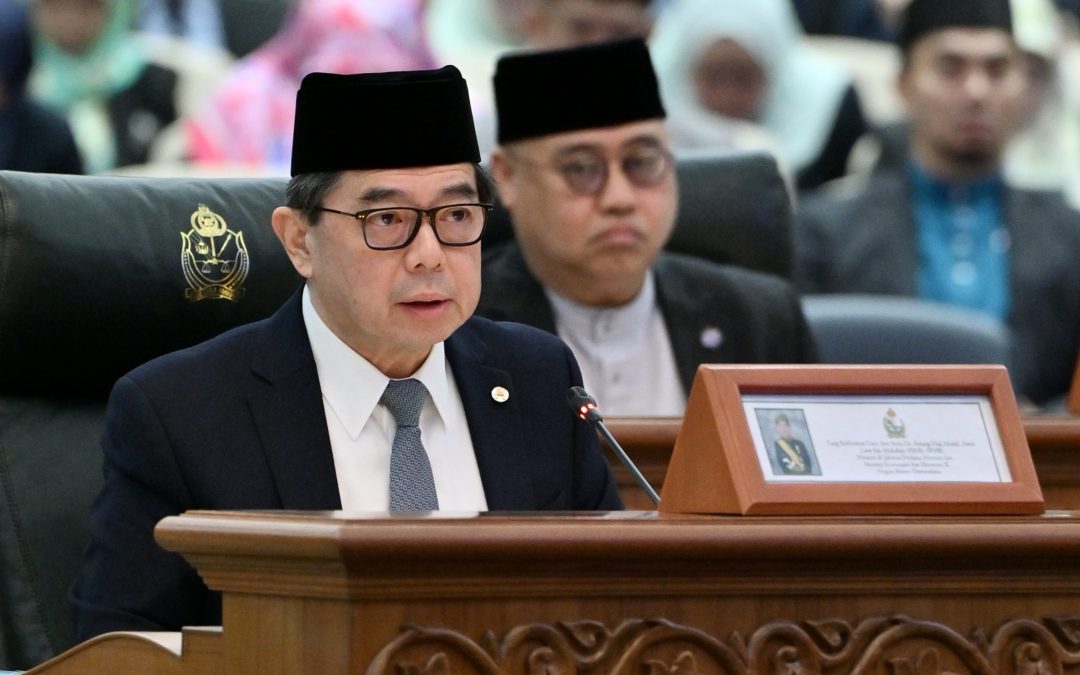
Brunei Vision 2035 calls for the development of a highly educated and skilled population, achieving a high quality life and building a dynamic and sustain- able economy. To achieve this goal, a comprehensive, balanced and data-based human capital strategy is required, Legislative Council (LegCo) member Yang Berhormat Dr Haji Mahali bin Haji Momin said during the second day of the Second Meeting of the 21st LegCo Session.
The National Youth Policy and Strategy 2020-2035 emphasis- es that every youth should have access to meaningful education, training and employment and demands empowerment not only in the technical sec- tor but also in areas requiring creativity, communication and human values.
The 2023 and 2024 Labour Force Surveys show that the youth unemployment rate has increased from 16.8 per cent to 18.3 per cent, indicating that strategic employment areas have not yet been opened up inclusively. This policy has not yet been implemented comprehensively.
Non-technical graduates such as in Islamic studies, management, languages, his- tory, literature and social sciences are often considered the second group after technical graduates, which is a strategic mistake, Yang Berhormat Dr Haji Mahali added.
On increasingly complex global thinking, he said communication skills, cultural understanding, leadership values and adaptive skills are important elements for the country’s key sectors. “It is time for non-technical graduates to be recognised as one of the main components of the national development agenda, not as a mere complement.”
The EduStats 2022 study reinforces this finding empirically with statistics showing humani- ties and social sciences fields continuing to have a high enrolment rate with 8,021 students for year 2022 while Technical and Vocational Education and Training (TVET) recorded an enrolment of 4,660 students in various programmes such as NTec, HNTec and Diploma Levels 3 to 5. The production of graduates in the non-technical fields saw 1,742 graduates that year, surpassing the number of graduates in technical fields which amounted to 1,279.
The difference is that TVET receives systematic support in the form of various specialised institutions, training infrastructure and clear career paths, and guidance on industry standards while non-technical graduates do not receive such a support approach in terms of practical training, integration into the strategic employment eco- system, or data-based career mapping.
“There is an urgent need for a more inclusive and balanced policy between technical and non-technical streams,” Yang Berhormat Dr Haji Mahali said.
(News source: Borneo Bulletin)