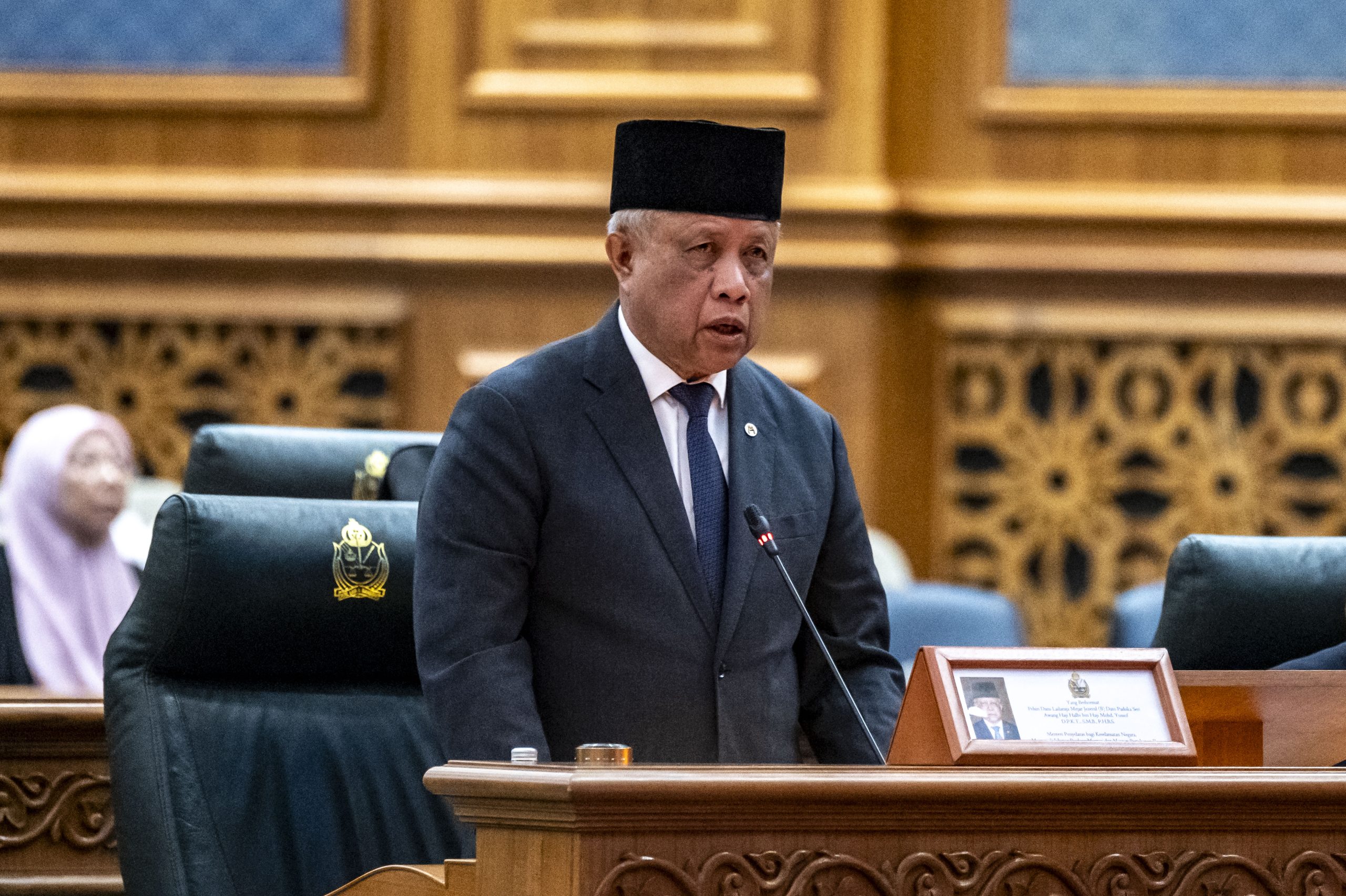
Members of the Legislative Council (LegCo) have agreed and approved the Motion to Support Coordination Towards Achieving Wawasan Brunei 2035 on the third day of the Second Meeting of the 22nd LegCo Session on Thursday.
In his closing remarks on the motion, Coordinating Minister for National Security, Minister at the Prime Minister’s Office and Minister of Defence II Yang Berhormat Pehin Datu Lailaraja Major General (Rtd) Dato Paduka Seri Awang Haji Halbi bin Haji Mohd Yussof said the debate provided an opportunity to comprehensively examine how the nation’s development efforts could be advanced through a more integrated and coordinated approach.
He said the diverse views shared during the debate reflected the spirit of syura, which goes beyond the exchange of opinions by encouraging the pursuit of common ground, mutual understanding and consensus for the benefit of the nation and its people.
The minister expressed his appreciation to LegCo members for their constructive views and recommendations, which he said reflected the collective commitment towards strengthening national development efforts in achieving Brunei Vision 2035.
Yang Berhormat Pehin Datu Lailaraja Major General (Rtd) Dato Paduka Seri Awang Haji Halbi highlighted several strategic priorities that must continue to be strengthened, including clear leadership and accountability; efficiency in decision-making and implementation; focus on outcomes and impact; strengthening the business and investment ecosystem; creating quality employment opportunities; developing local talents; ensuring food and energy security; accelerating digital transformation; strengthening research, utilisation and data analysis; improving communication strategies; and encouraging active participation from all segments of society.
These include the private sector, educational institutions, non-governmental organisations, grassroots leaders, citizens and residents.
He said greater focus must be placed on strengthening the link between planning, implementation and achievement. He stressed that coordination should not only be measured by structures, committees or meetings, but by its ability to provide clear direction, accelerate decisions, overcome challenges and deliver meaningful outcomes.
In this regard, he said the role of Coordinating Ministers serves as a mechanism to further strengthen existing government coordination efforts. He explained that the role is not intended to take over the mandates and responsibilities of ministries or agencies, but to ensure that cross-sectoral matters have clear leadership, structured follow-up actions and jointly agreed solutions. To translate coordination into effective implementation, he outlined several key requirements.
These include ensuring every cross-ministry priority has clearly defined outcomes and achievements, identifying lead agencies and the roles of stakeholders, establishing realistic implementation timelines, and developing more meaningful measures of success.
He added that Key Performance Indicators (KPIs) should focus on outcomes and impact, while challenges must be identified early with clear solutions and resources coordinated effectively to maximise benefits for the nation and its people.
The minister said the debate also put forward constructive recommendations to strengthen several priority areas.
On unemployment, he said training and employment opportunities must continue to be supported by the growth of potential economic sectors, alongside stronger coordination between industry needs, educational institutions and manpower planning.
For societal wellbeing, he said assistance recipients should be empowered to become more self-reliant through skills development and employability enhancement initiatives, while integrated efforts must continue to address the underlying factors contributing to poverty.
On energy and infrastructure, he stressed the importance of long-term planning and comprehensive coordination among stakeholders to ensure future capacity requirements, energy efficiency, resource diversification and the continuity of critical services such as electricity and water supply. He said food security requires strengthening the entire value chain, including production, processing, logistics, markets and halal certification, to enhance supply assurance, national resilience and economic opportunities.
On digital transformation, he said efforts must be accelerated through secure systems, quality research and data-driven analysis to strengthen policies and identify risks. He added that the business ecosystem must be improved by reducing overlapping and fragmented processes. Micro, Small and Medium Enterprises (MSMEs), he said, require improved access to financing, infrastructure, utilities, technology and professional workforce, while the private sector should be recognised as an important development partner in generating economic growth, innovation and employment opportunities.
In investment, Yang Berhormat Pehin Datu Lailaraja Major General (Rtd) Dato Paduka Seri Awang Haji Halbi said success should be measured not only by investment value, but also by its ability to create quality jobs, involve local enterprises, facilitate knowledge transfer and strengthen national capabilities.
He also emphasised that coordination must extend beyond the government through a whole-of-nation approach involving the private sector, educational institutions, community organisations, citizens and residents.
He said all stakeholders are not merely beneficiaries, but partners in national development, with progress achieved and implementation challenges requiring clear, transparent and consistent communication.
Mechanisms such as dashboards were also highlighted as approaches to strengthen information sharing.
Summarising the debate, the minister outlined five key messages: strengthening the implementation of Brunei Vision 2035 objectives to achieve tangible outcomes; ensuring every cross-ministry priority has alignment, coordination, clear leadership, accountability and realistic timelines; assessing performance based on outcomes and meaningful impact; strengthening whole-of-government and whole-of-nation approaches; and ensuring implementation progress is monitored, evaluated and communicated clearly, transparently and consistently. These efforts, he said, will continue to support the realisation of Brunei Vision 2035.
(news source: Borneo Bulletin ; pic source: Info Foto, Jbt Penerangan)