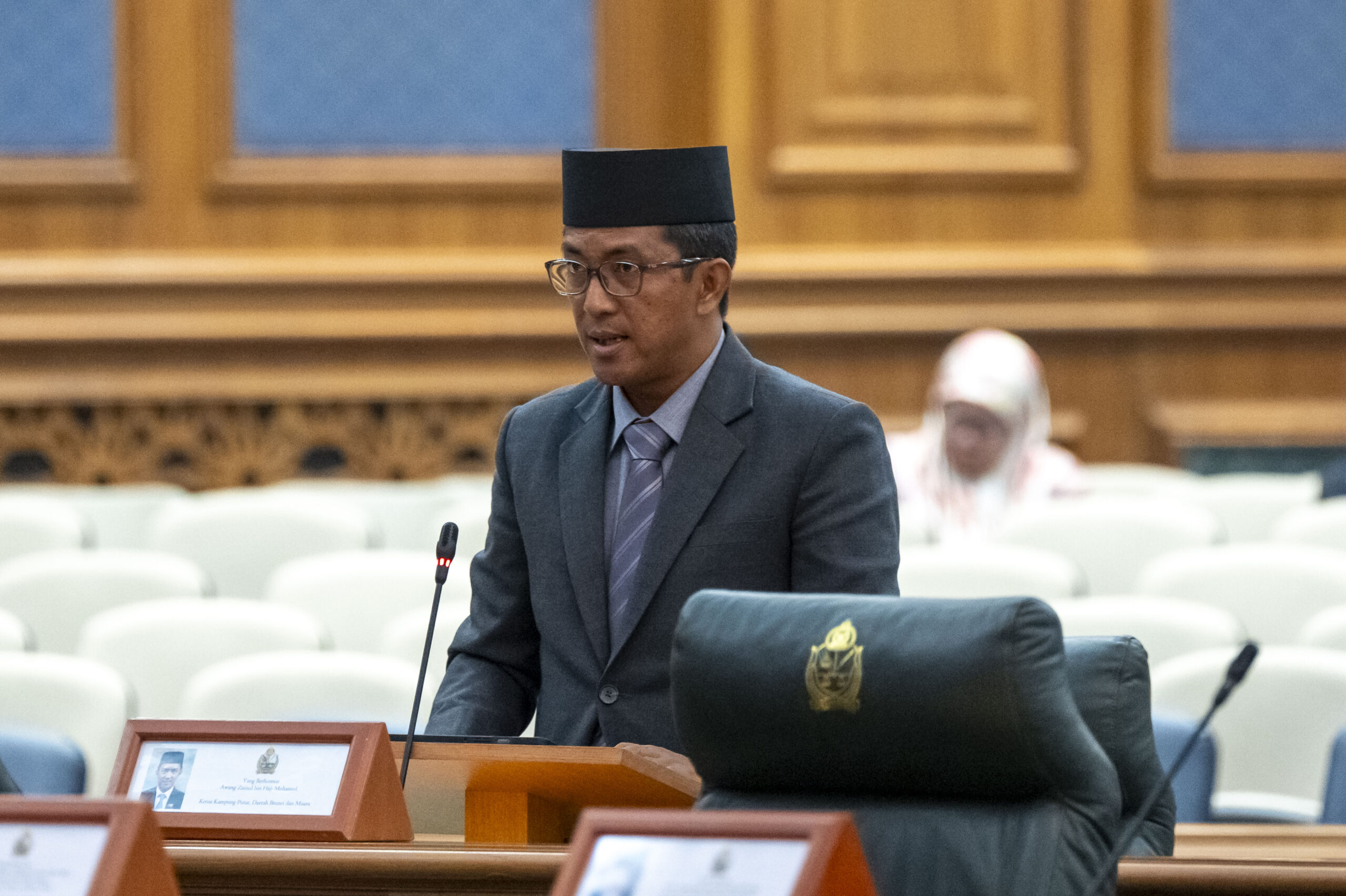
The proposed Code of Ethics and Conduct for Legislative Council (LegCo) members should serve as more than a set of rules, but as a foundation for building a stronger and more consistent institutional culture, said LegCo member Yang Berhormat Awang Zainol bin Haji Mohamed.
Yang Berhormat Awang Zainol said the development of the Code marked an important step towards strengthening the institution, establishing clear standards for the responsibilities and conduct expected of members.
He noted that while rules could be established within a short period, institutional culture could only be developed through consistent practice over time.
“The Code should eventually become part of how the institution functions, rather than merely a document referred to when questions arise,” he said.
Yang Berhormat Awang Zainol also stressed that the responsibilities of members extended beyond simply determining whether an action complied with a rule.
Members often faced decisions involving different implications for the institution, society and national interests, he said, adding that the true value of the Code lay in its ability to strengthen the quality of members’ judgement.
The Code, he said, should guide members to make decisions that were not only compliant with established rules but also consistent with their position and responsibilities as members of the Council.
He also highlighted the importance of developing institutional memory through the implementation of the Code.
With the Council membership changing over time and members bringing diverse backgrounds, experiences and expertise, the identity and principles of the institution should remain consistent, he said.
Experiences gained from implementing the Code, including the interpretation and application of its ethical principles, should therefore be preserved as institutional knowledge to ensure that its principles continue to evolve consistently.
Yang Berhormat Awang Zainol further noted that the Code was closely linked to the quality of debates in the Chamber.
He said public confidence in the LegCo depended not only on its constitutional powers, but also on confidence that its processes were conducted according to standards that were transparent, responsible and trustworthy.
He also welcomed the provision for periodic reviews of the Code, noting that the role of members was continuing to evolve through increased engagement in parliamentary diplomacy, international organisations, the private sector, academia, professional bodies and the wider community.
At the same time, technological developments were changing how members communicated, managed information and carried out their responsibilities.
Periodic reviews would therefore provide an opportunity for the Council to assess how the principles of the Code could continue to be applied consistently amid changing circumstances.
(news source: Borneo Bulletin ; pic source: Info Foto, Jbt Penerangan)