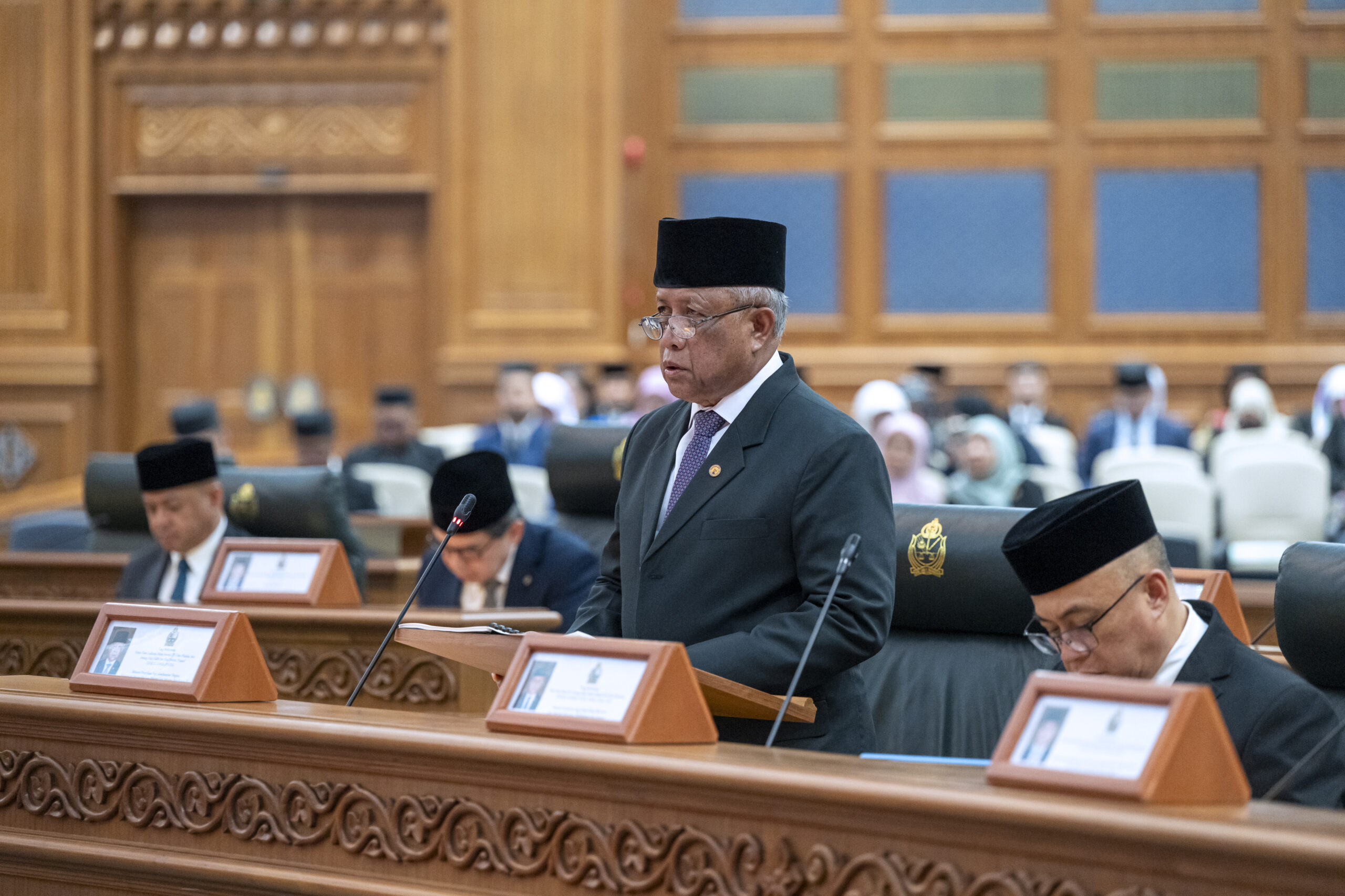
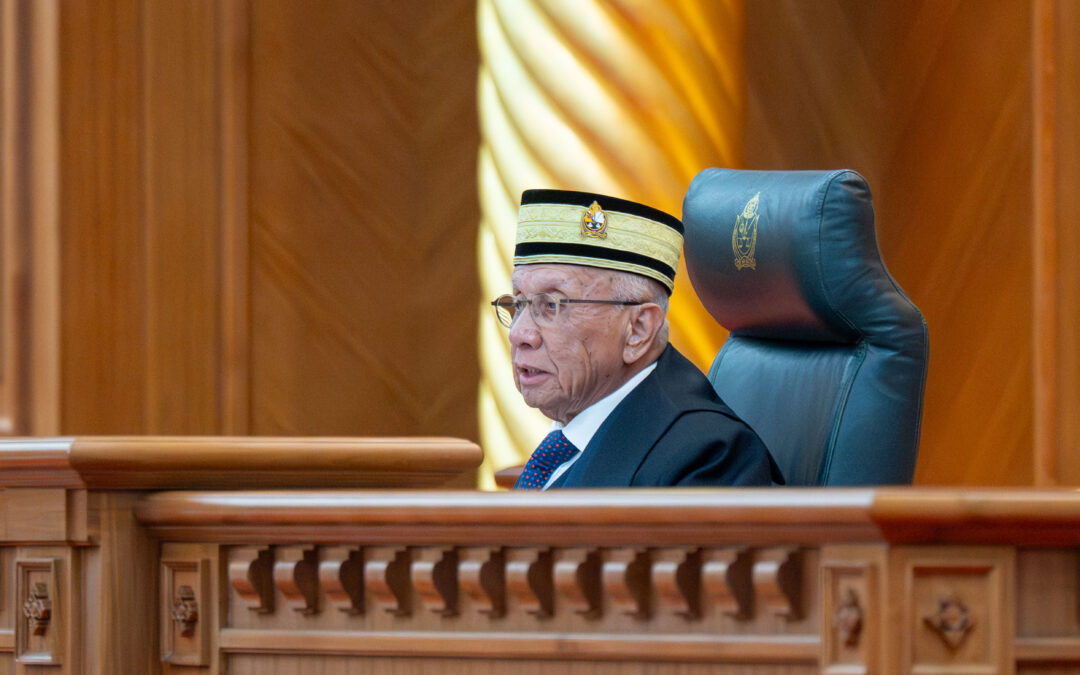
Coordinating Minister for National Security, Minister at the Prime Minister’s Office and Minister of Defence II Yang Berhormat Pehin Datu Lailaraja Major General (Rtd) Dato Paduka Seri Awang Haji Halbi bin Haji Mohd Yussof during the fifth day of the Second Meeting of the 22nd Legislative Council (LegCo) Session stressed the need for greater focus on implementation, noting that citizens and residents want to see policies, action plans and initiatives translated into more efficient public services, quality employment opportunities, a conducive business and investment environment, resilient supplies of essential goods, technology that delivers added value, and tangible solutions to issues affecting their daily lives.
He shared, “One of the clear points emerging from the debates throughout this session is that today’s development challenges are increasingly interconnected.
“Education is closely linked to talent development and employment opportunities; economic growth is tied to investment, productivity and competitiveness; while the well-being of society is closely connected to housing, healthcare and social protection.
“National resilience also depends on food and energy security, infrastructure, digital transformation and overall national security.”
Therefore, he said, “Coordination does not mean that all matters must be managed by a single party. Rather, it ensures that the efforts of ministries and agencies complement one another, which cross-cutting issues are addressed collectively, and that decisions take into account the broader interests of the nation. In this context, the roles of the Coordinating Ministers are to strengthen existing coordination without taking over the respective mandates of ministries and agencies.
“The debates also reminded us that Brunei Darussalam already has a wide range of policies, strategies, blueprints, programmes and initiatives. The priority now is to strengthen the link between planning, implementation and outcomes. This requires clear leadership, well-defined responsibilities, realistic timelines, the use of data and evidence in decision-making and early intervention whenever implementation gaps or challenges arise,” he said. For matters involving multiple ministries and agencies, he explained, “Coordination should lead to solutions rather than create additional layers of processes. Issues should be addressed at the appropriate level, while issues requiring collective decisions should be brought forward through the established mechanisms, supported by clear information and practical options for action.”
He added, “Government efforts alone are not sufficient. The private sector, educational and research institutions, professional bodies, non-governmental organisations, grassroots communities, youth, as well as the people and residents all have important roles to play. A Whole-of-Nation approach provides an avenue for the experience, expertise, investment, innovation and initiative across the entire national ecosystem to be harnessed towards a common goal.
“The appointed Members of the LegCo also have an important role to play in this regard. Views and perspectives from the community, industry and grassroots level can serve as valuable input into the formulation and implementation of policies.
Continuous consultation and engagement between the LegCo members and ministries as well as agencies will strengthen mutual understanding and help identify solutions that are more practical, responsive and sustainable.”
(news source: Borneo Bulletin ; pic source: Info Foto, Jbt Penerangan)