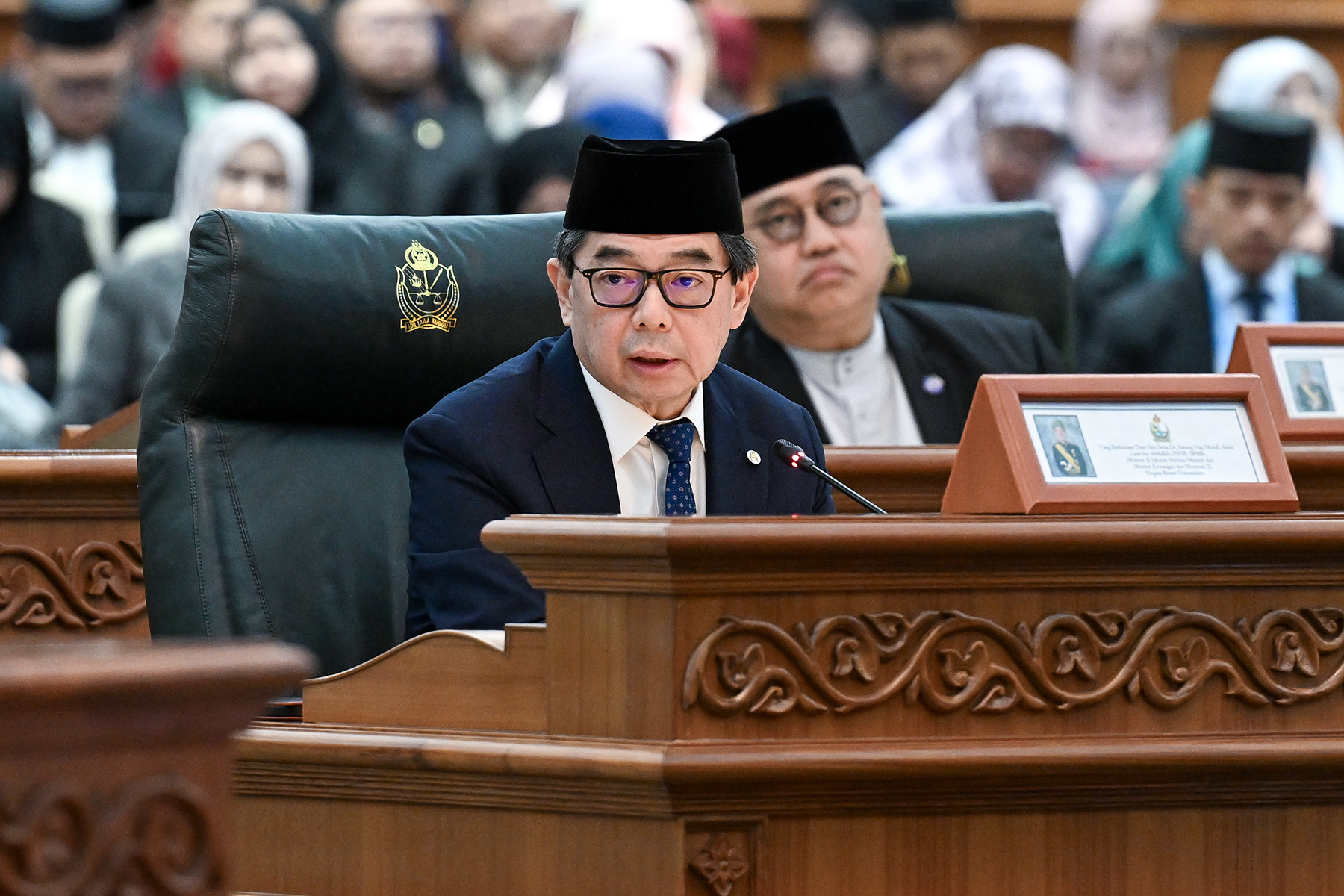
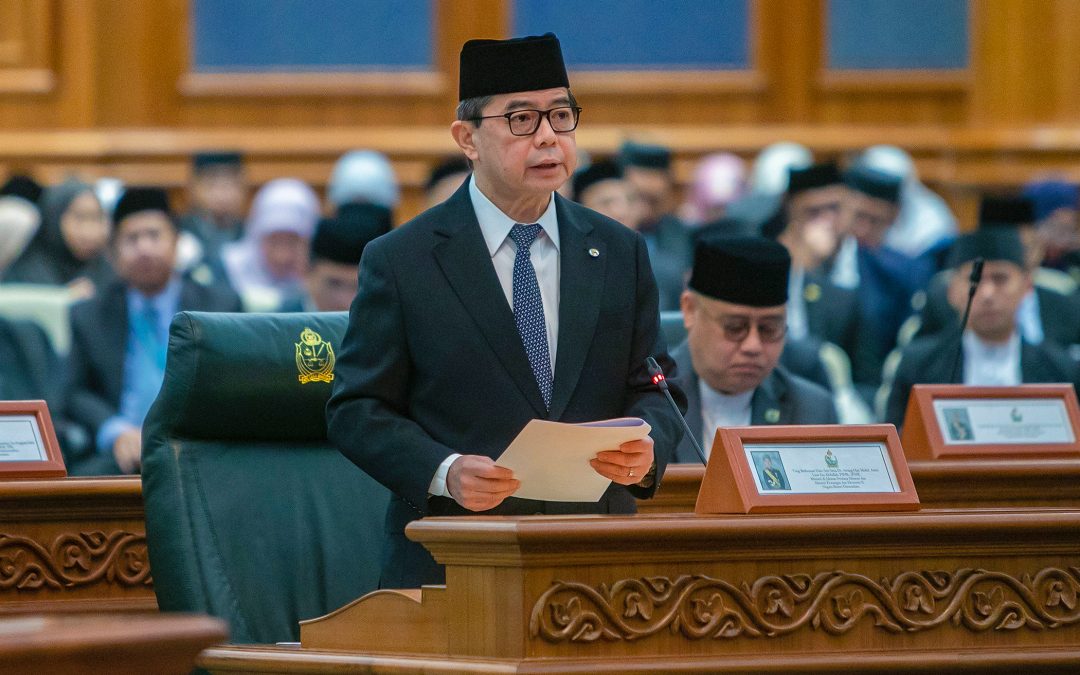
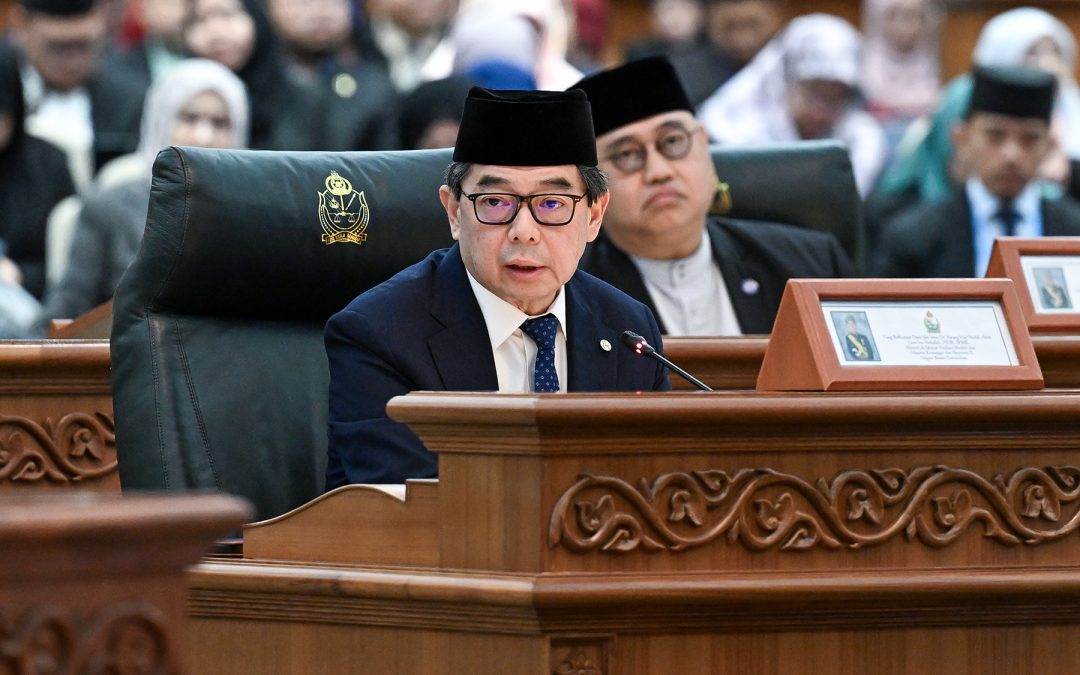
Minister at the Prime Minister’s Office and Minister of Finance and Economy II Yang Berhormat Dato Seri Setia Dr Awang Haji Mohd Amin Liew bin Abdullah yesterday, in response to questions raised by Legislative Council (LegCo) members, explained the reduction in electricity arrears and the progress of the ASEAN Centre for Climate Change in Brunel Darussalam, during the seventh day of the First Meeting of the 22nd Session of the LegCo.
He said, “With all electric meters having been changed to smart meters, electricity arrears will continue to decrease continuously. However, there are still previous electricity arrears. Therefore, consumers are given the option to settle their arrears through installment payments and not in a lump sum.”
With the effort of installing smart meters and providing the option for consumers to settle their arrears through instalment payments, he said, “Insya Allah, the amount of arrears will continue to decrease in the near future.”
On the ASEAN Centre for Climate Change in Brunei Darussalam, he said, “The ASEAN Centre for Climate Change is currently in the ratification stage by ASEAN member countries. including Brunei. The process of ratification will take a long time because the process of ratification is in accordance with the law of each ASEAN member country.”
For the Sultanate as the host country, he explained that it will require extra measures compared to other ASEAN member countries to ensure everything is in order from a legal perspective so that the country has the capacity to uphold the commitments as host country. Brunel is ready to ratify the agreement and will announce it in the near future.
Other ASEAN member countries have started their ratification process, he said.
“These ratification processes will require at least six signatures of ASEAN countries and then require 60 days to pass, by then handed over to the ASEAN Secretariat for it to come into force.
“The ASEAN Centre for Climate Change in Brunei Darussalam will be formally established in the near future.”
He added, “Despite Brunei being the host for the ASEAN Centre for Climate Change, the centre is not under the jurisdiction of Brunei Darussalam. It is under ASEAN.
Since the launch of the Brunei National Climate Change Policy in 2020, he said several achievements were made, like the reduction of greenhouse gas to 14.98 million tonnes of carbon dioxide compared to the business-as-usual figure of 1713 million tonnes.
The reduction was due to several main strategies implemented, including reduction in emissions from the industry sector, land transport, power generation, and waste, as well as an increase in forest coverage and the use of renewable energy.
He highlighted, “Climate change will happen; therefore, we have to come up with a national adaptation plan. We need to take into account several important issues like marine protection and coastal resilience, biodiversity and environment, water sources, agriculture and food security, infrastructure, health, and livelihood.”
In preparation for climate change, he added, “An assessment has been carried out, which is the national climate vulnerability assessment, to assess in-depth the level of impact of climate change to make sure that adaptation strategies can be developed in a responsive, suitable, and effective manner.”
He added, “An adaptation and resilience working group has been established involving several relevant parties from the private and public sectors, higher education institutions, and nongovernmental organisations, with the whole-of-nation approach to make sure that the adaptation strategy to climate change is holistic and in line with climate change disaster management.”
Currently, he said, “There are several projects identified. The first project was suggested by the Brunei Darussalam Meteorological Department, involving a comprehensive report on predicting the change of weather patterns, including the risk of weather change that may affect the country and can help to inform the policy of adaptation.
“Two projects suggested by UBD include one pilot study to analyse the impact of reforestation and restoration of local vegetation after the invasion of the Acacia species, as well as the development of a biodiversity system for endangered species,” said the minister.
(news source: Borneo Bulletin; pic source: Info Foto, Jabatan Penerangan)