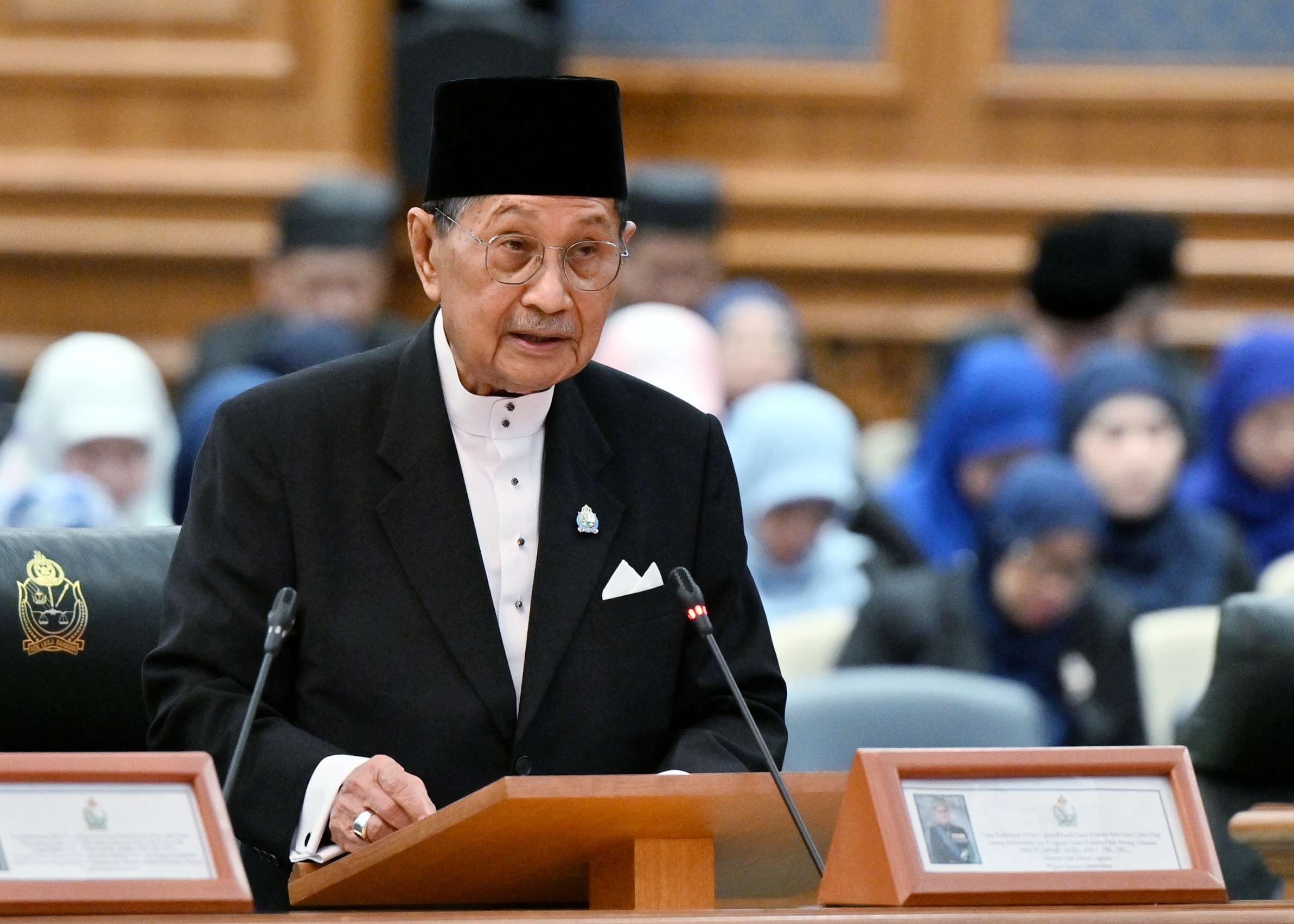
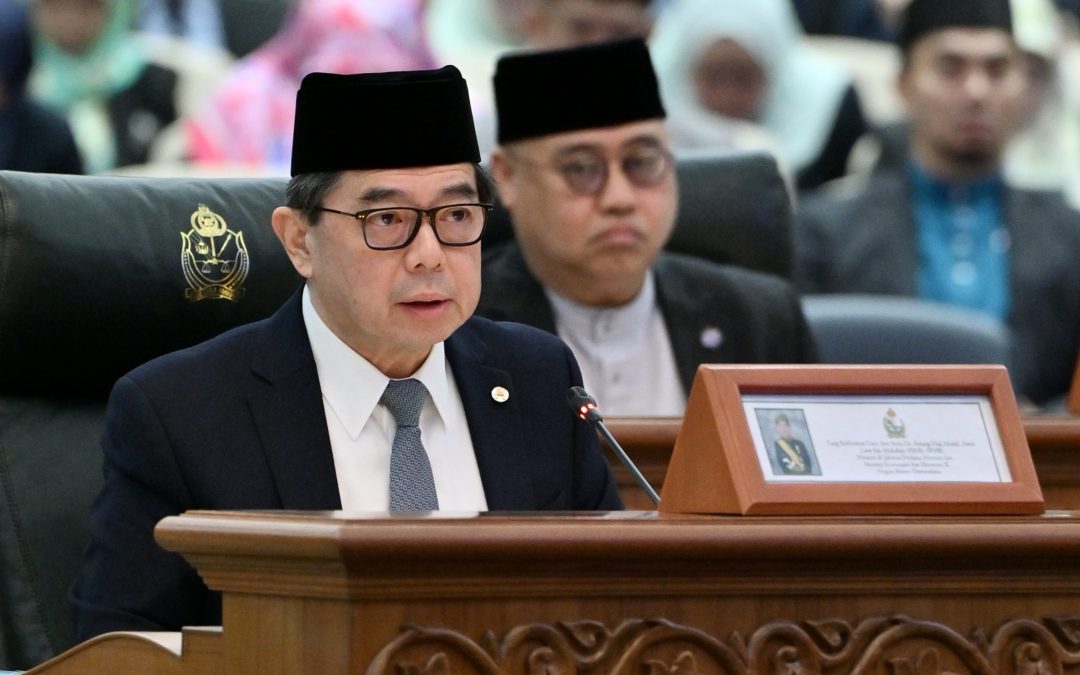
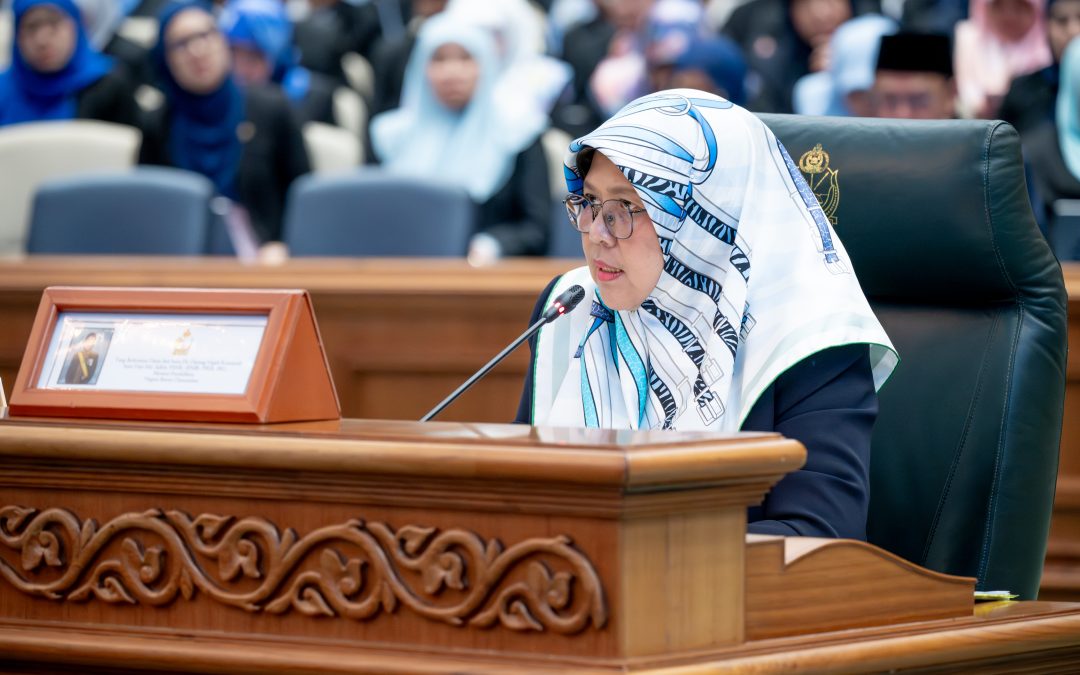
The effectiveness of zakat and waqaf should not be measured solely by total collections, but by three key aspects: transparency in processes, efficiency in delivery, and real long-term impact on people’s livelihoods, said Minister of Religious Affairs Yang Berhormat Pehin Udana Khatib Dato Paduka Seri Setia Ustaz Haji Awang Badaruddin bin Haji Awang Othman.
The minister said this in his ministerial statement on ‘Strengthening Zakat or Tithe and Waqaf Governance Towards a Sustainable Well-being of the People’ during the First Meeting of the 22nd Session of the Legislative Council yesterday.
He shared that the Ministry of Religious Affairs has outlined a strategic initiative to enhance the governance of zakat and waqaf towards achieving long-term societal well-being under the theme ‘Strengthening Zakat and Waqaf Governance Towards Sustainable Public Welfare’.
Under its first strategic focus, the ministry highlighted improvements in systematic and digital-based zakat collection. Initiatives include strengthening structured management systems, expanding payment channels, and increasing public awareness of zakat obligations.
As a result, zakat collection continues to show positive growth. Zakat Fitrah collection for 2025 reached BND1,034,413.03, reflecting a 2.4 per cent increase from the previous year and the number of contributors also rose significantly to over 393,444 individuals compared to the 357,436 individuals the previous year, which is an increase of 36,007 individuals or 10 per cent.
Online payments recorded notable growth, reaching BND387,372.38 demonstrating public readiness to adopt modern, efficient payment methods compared to BND350,653.70 previous year.
Meanwhile, zakat on property collections for 2025 amounted to BND20,371,761.96 marking a steady increase from the previous year of BND20,186,634.75. Digital channels, including online payments and automated deductions, contributed over BND4,166,345.17.
The ministry plans to further strengthen collaborations with financial institutions and telecommunications companies, while enhancing services through counters and appointed mosque amil nationwide. A new online booking system has also been introduced to streamline payment services.
Yang Berhormat Pehin Udana Khatib Dato Paduka Seri Setia Ustaz Haji Awang Badaruddin also touched on the benefits of digital transformation on increase zakat or tithe collection. The increase clearly proves the community is ready to accept a more modern practical and efficient payment method.
The second focus addressed the strategic resolution of application backlogs through the Department of Zakat, Waqaf and Baitulmal.
Through a special task force initiative, the ministry successfully resolved 2,380 backlog cases from 2020 to 2024 within just 10 weeks. Improvements included the use of official SMS notifications to communicate directly with applicants and enforce response timelines.
As a result, pending inquiry cases have significantly decreased, with monthly cases now consistently below 80.
He further highlighted structured and targeted zakat distribution under various schemes, including basic necessities, monthly financial aid, education, medical assistance, housing and entrepreneurship programmes.
Last year alone, over BND13,106,145 was distributed for basic necessities benefiting 8,900 families; BND1,314,200 allocated for monthly financial assistance; BND4,849,680 supported education for over 3,400 students; and BND3,400,696.00 was distributed for housing rental assistance.
A key initiative, the Zakat Asnaf Empowerment Programme (PROPAZ), continues to play a vital role in uplifting beneficiaries where since its introduction in 2007, more than 1,300 participants have been engaged, with many successfully completing skills training and generating their own income.
Notably, 262 asnaf or 61 per cent of participants have achieved financial independence, while more than half no longer rely on zakat or welfare assistance from the Community Development Department (JAPEM).
In recognising housing as a key component of well-being, the ministry has delivered 128 houses since 2009, including five new homes completed in 2026 and 12 homes have been repaired for underprivileged families.
Efforts are prioritised for those living in unsafe, or unsuitable conditions, alongside temporary rental assistance schemes. Close collaboration with relevant agencies has also enabled the identification of land for housing development across all districts.
Looking ahead, the ministry outlined several forward strategies to ensure sustainability namely Asnaf Exit Policy: A structured pathway to help recipients transition out of poverty and become zakat contributors; Productive Waqaf Transformation: Moving towards income-generating waqaf projects through strategic partnerships; Capacity Building: Enhancing competencies of amil and governance standards through digital and Syariah-compliant systems: and End-to-End Digital Ecosystem: Developing integrated systems, including AI-driven analytics to predict and address poverty trends.
In conclusion, the minister reaffirmed the ministry’s commitment to safeguarding the welfare and well-being of the people, particularly those facing economic challenges.
Zakat and waqaf funds continue to play a significant role in supporting national development and strengthening fiscal resilience, in line with Brunei Vision 2035.
The ministry expressed hope that these efforts will continue to contribute towards and prosperous, peaceful, and sustainable Brunei Darussalam.
(news source: Borneo Bulletin; pic source: Info Foto, Jabatan Penerangan)