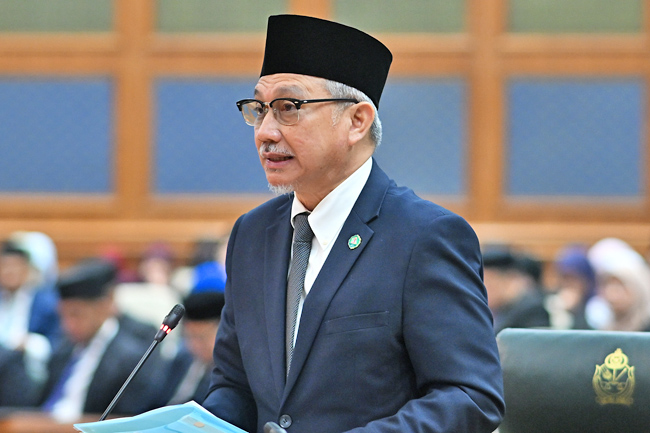
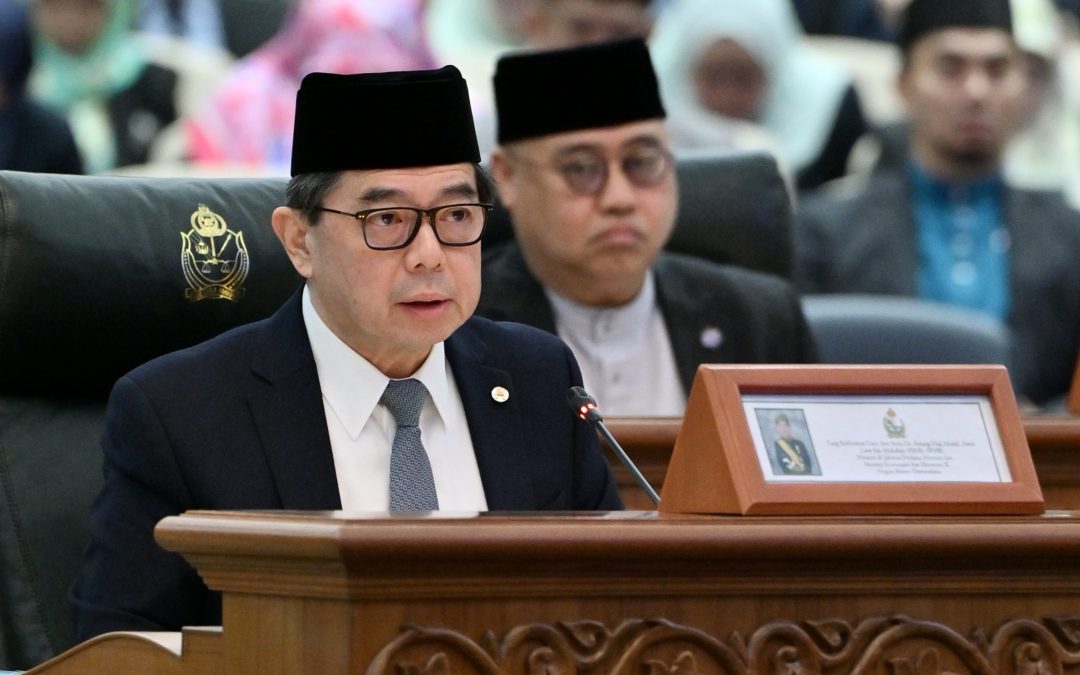
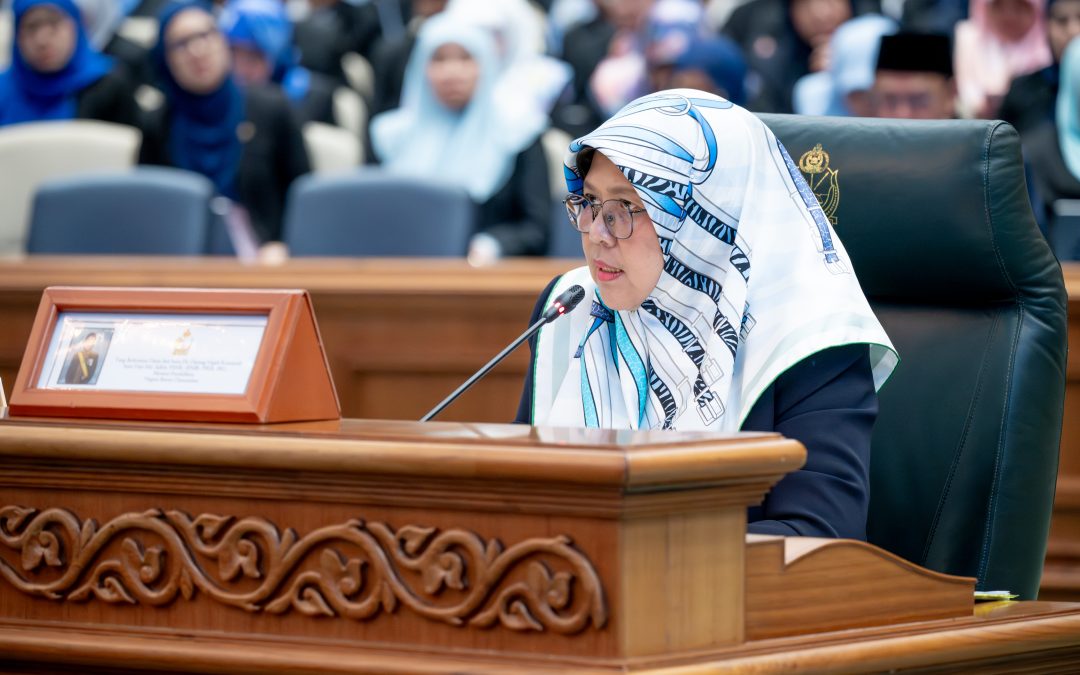
Minister of Development Yang Berhormat Dato Seri Setia Awang Haji Muhammad Juanda bin Haji Abdul Rashid highlighted ongoing efforts to modernise the housing application process and ensure the involvement of local contractors in large-scale development projects during the 21st Legislative Council (LegCo) session.
In response to queries regarding the digital tracking system for public housing applications, he explained that the Housing Development Department currently offers online payment services via the One Common Billing System (OCBS). However, processes such as checking the status of housing applications and updating information still require in-person visits to the Housing Development Department’s Application Management Division.
The minister acknowledged the potential benefits of a digital tracking system, including increased transparency, where applicants could track their status online at any time. This would also improve service efficiency, as applicants would no longer need to visit the counter repeatedly for updates. The ministry plans to conduct a study to assess the feasibility of implementing this system in the future.
Regarding mega projects and local contractor participation, the minister responded to LegCo member Yang Berhormat Haji Salleh Bostaman bin Haji Zainal Abidin’s inquiry about reviewing policies for awarding tenders.
He explained that the Ministry of Development (MoD) follows a policy that ensures open or selective bidding for each project, approved by the National Tender Board in line with Financial Regulations.
For any mega project involving foreign consortiums, the policy mandates the inclusion of local companies through joint ventures. This approach ensures that local contractors benefit from skill transfers, subcontracting opportunities, and project expenditures contributing to the local economy.
Additionally, large-scale projects are broken into smaller packages to allow more local contractors to participate.
The Sultan Haji Omar ‘Ali Saifuddien Bridge Construction (Temburong Bridge) project, awarded to a consortium of companies from China and South Korea, serves as an example.
This project involved 14 local consulting companies and utilised a phased approach with 115 local workers, including professionals and skilled workers. It also engaged 40 local subcontractor companies and 10 local suppliers.
The Lugu National Housing Scheme project, valued at BND108.6 million, is another example where local contractors were involved.
The project, awarded to Swee Sdn Bhd, engaged 36 local staff across various fields, including design, environmental assessment and surveying. It also relied on eight local subcontractor companies and 10 local suppliers for various services and materials.
Similarly, the Tanah Jambu National Housing Scheme (SPN), valued at BND96.97 million, showcased active participation by local contractors and consultants.
The project, carried out by a local consortium, included 36 local workers and the involvement of six local consulting companies.
To further support local businesses, the ministry established the Local Business Development Committee on August 6, 2024.
This committee aims to strengthen the capacity of local companies and the workforce in the construction industry. Capacity-building programmes, skills training, and strategic collaboration will be prioritised to ensure local companies remain competitive and continue to benefit from large-scale development projects. The minister affirmed that the MoD would continue efforts to involve local contractors and workers in all development projects.
These initiatives, including staff training, subcontracting opportunities, and project distribution, are designed to improve the socio-economic status and skills of local citizens.
In response to LegCo member Yang Berhormat Mohammad bin Abdullah @ Lim Swee Ann’s inquiry on building small-scale rural housing schemes, the minister emphasised the importance of careful planning and studies to ensure such projects are effective and sustainable.
The ministry is focusing on housing development in areas that already have basic facilities, such as schools and commercial areas.
Several rural growth centres have been identified for possible development, including Kampung Sungai Mau and Kampung Labi in the Belait District, and Lamunin-Menengah and Sungai Supon Besar in Tutong District.
These centres are intended to provide planned settlements that allow villagers to remain in their communities while having access to adequate facilities.
“These areas can be developed, but we must consider the response from applicants to ensure that there is genuine interest in these locations,” he said.
(News & pic source: Borneo Bulletin)