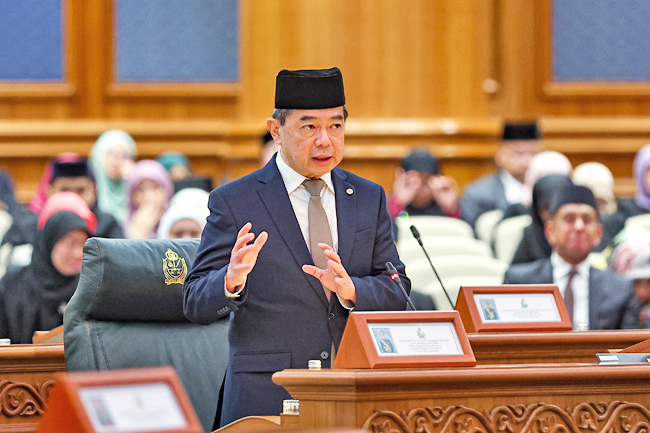
In his speech on the motion of Brunei Vision 2035 during the Second Meeting of the 21st Legislative Council (LegCo) Session, Minister at the Prime Minister’s Office and Minister of Finance and Economy II Yang Berhormat Dato Seri Setia Dr Awang Haji Mohd Amin Liew bin Abdullah emphasised the government’s commitment to a prudent and responsible fiscal policy.
Key strategies include the continued implementation of the Fiscal Consolidation Programme (FCP), closer monitoring of development expenditure to ensure high returns, and efforts to broaden the country’s income base beyond oil and gas without burdening low-income groups.
He also addressed concerns over declining allocations for the National Development Plan (RKN), clarifying that RKN funding has grown over time, reaching BND4 billion under the RKN12, and that project planning remains responsive to changing national needs and conditions.
The minister further explained that RKN projects are regularly reviewed for relevance and effectiveness, with flexibility to adopt new technologies and alternative financing methods such as public-private partnerships and corporatisation.
These approaches help enhance service delivery and support national development. He also addressed the importance of ongoing support for micro, small and medium enterprises (MSMEs), describing them as the backbone of the non-oil and gas economy. Through initiatives like micro-incubation, financing schemes and export support, MSMEs are being strengthened to boost economic diversification and contribute to GDP.
On employment opportunities, the minister highlighted national efforts to address job mismatch and prepare a future-ready workforce. He detailed how the Manpower Planning and Employment Council (MPEC), in collaboration with the Ministry of Education, is updating curricula to include skills relevant to emerging technologies such as artificial intelligence, data science, and green technology. These updates are being implemented in local universities, while scholarships and loan schemes support further studies abroad in areas not yet offered locally. These initiatives are designed to ensure alignment between education and industry demand as outlined in the Economic Blueprint.
To improve the ease of doing business, the minister acknowledged concerns about slow business processes. In response, the Ministry of Finance and Economy, working with other government agencies, is striving to improve efficiency and streamline policies.
The government remains committed to creating a more business-friendly environment, with continued engagement with the private sector to understand their challenges and encourage investment and growth.
Finally, the minister addressed labour market trends, particularly during the challenging COVID-19 pandemic period. While the number of new jobs created between 2019 and 2022 appeared modest, with an increase of only 1,743, a deeper look revealed a significant rise of 8,881 in local workforce recruitment.
Citing the Labour Force Survey, he noted that private sector employment grew from 100,000 in 2014 to 155,200 in 2024, rising from 53 per cent to 70 per cent of the total workforce.
This growth demonstrates the resilience of Brunei’s labour market and reflects the increasing participation of local youth in the private sector, even in the face of global economic challenges.
(News & pic source: Borneo Bulletin)