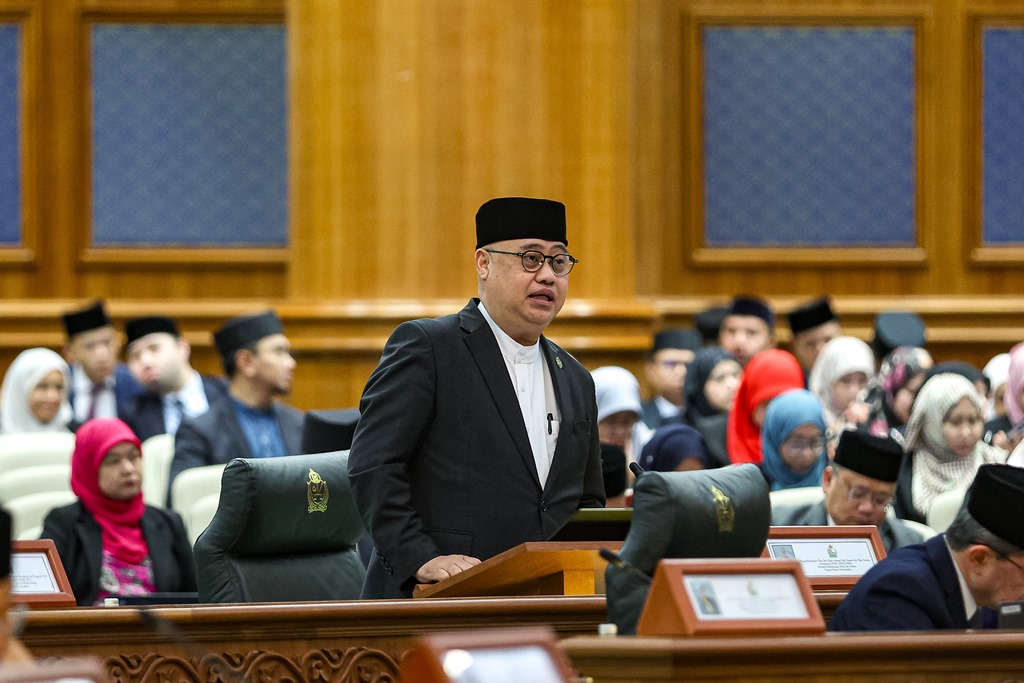
Poverty in Brunei Darussalam is categorised as relative poverty rather than absolute poverty as defined by the World Bank, said Minister of Culture, Youth and Sports Yang Berhormat Dato Seri Setia Awang Nazmi bin Haji Mohamad during the third day of the second meeting of the 21st Legislative Council session on Wednesday.
According to the World Bank, the international poverty line is set at approximately BND2.45 per day. In contrast, Brunei defines those in need based on the Minimum Basic Needs Cost (Kos Minimum Keperluan Asas or KMKA), which includes estimated costs for both food and non-food necessities.
The 2015/2016 Family Expenditure Survey determined the KMKA in Brunei Darussalam at BND283 per person per month – comprising BND167 for food and BND116 for non-food items.
The minister highlighted that compared to the international benchmark, Brunei’s assessment of individuals in need is more comprehensive. Those unable to meet the KMKA threshold are categorised as requiring assistance, including recipients of the Monthly Welfare Assistance (BKB) under the Community Development Department (JAPEM), as well as zakat recipients under the Department of Zakat, Waqf and Baitulmal Affairs (JUZWAB), and other forms of support provided by government and non-government entities.
To date, JAPEM has approved over 14,445 applications for BKB, with financial aid amounting to more than BND25.9 million. Meanwhile, JUZWAB approved 9,763 applications, disbursing over BND51.3 million in zakat assistance.
He underscored that safeguarding the welfare of the community is a whole-of-nation effort. Government agencies, private sector partners, NGOs, and grassroots groups work together not only to fulfil basic needs, but also to help individuals and families break the cycle of poverty.
This includes providing income-generation opportunities through employment and entrepreneurship, skills training for aid recipients and their dependents, access to education, and adequate housing.
The role of the Social Blueprint
The minister also elaborated on the Social Blueprint, one of three key national master plans alongside the Manpower and Economic Blueprints. The Social Blueprint aims to lay the foundation for inclusive and resilient national development, aligned with six national priorities under the Vision 2035 framework: Health, Social Wellbeing, Transport, Environment and Climate Change, Governance and Cooperation, and Science and Technology.
While implementation is still in the early stages, the minister noted positive outcomes.
Despite the progress, challenges remain, particularly in optimising resources, enhancing inter-agency coordination, and ensuring programme impact.
“Nonetheless, with comprehensive strategies, effective coordination, and a spirit of collaboration across all levels, we are confident the Social Blueprint will be a key driver in achieving the Second Goal of Brunei Vision 2035,” he said.
In his concluding remarks, YB Dato Seri Setia Awang Nazmi stressed the importance of a unified effort in realising the Blueprint’s aspirations.
He added that the Social Blueprint must not operate in isolation. Its success is closely tied to the Manpower and Economic Blueprints, which provide the economic and workforce foundations necessary to support Brunei’s broader social development goals.
“Together, these three Blueprints ensure that our national policies move in an integrated and complementary manner – guiding Brunei Darussalam towards a future that is inclusive, resilient and prosperous for all,” he said.
(News & pic source: Borneo Bulletin)