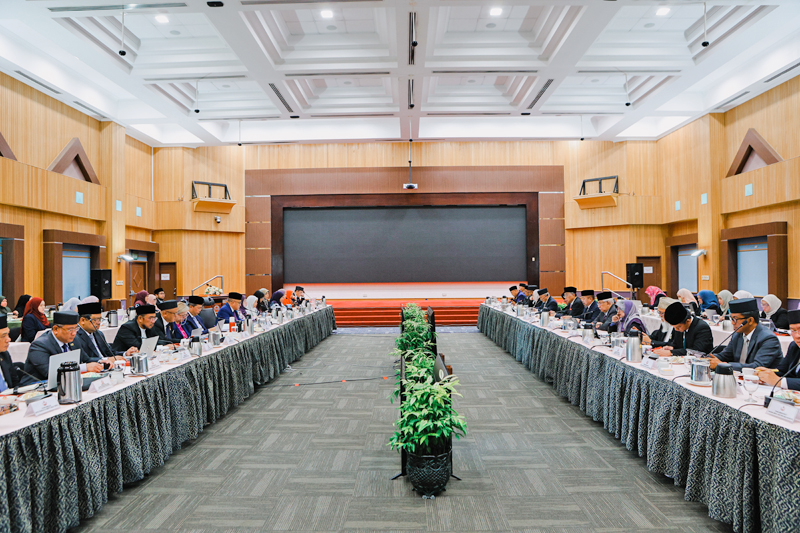
The Ministy of Primary Resources and Tourism (MPRT) yesterday held a muzakarah session with Legislative Council (LegCo) members at the ministry’s Setia Pahlawan Hall.
Minister of Primary Resources and Tourism Dato Seri Setia Dr Haji Abdul Manaf bin Haji Metussin was present.
A total of 16 LegCo members, led by Yang Berhormat Mohamad Ali bin Tanjong, participated in the session.
Deputy Permanent Secretary I at the Ministry of Primary Resources and Tourism Haji Mohd Yusree bin Haji Junaidi with department directors, heads of divisions, and senior officials of the ministry and departments under it were also present.
Following the welcoming remarks by the minister, the session also heard a briefing on the achievements and developments for 2025 and the future direction of the primary resources and tourism sectors, presented by the deputy permanent secretary, followed by a discussion as well as a question and answer session.
The deputy permanent secretary in his presentation shared, “In 2025, the level of self-sufficiency for key food commodities showed varied results. Egg supply exceeded domestic demand at 112 per cent while broiler chicken reached the 100 per cent level.”
“Self-sufficiency for buffalo and cow meats was aroudn 1.6 per cent, and rice supply remained dependent on imports, with only 8.5 per cent from local production. Tropical vegetables recorded 78 per cent; tropical fruits is at 43 per cent, while fish and shrimp supply reached approximately 63 per cent. In this regard, the ministry will continue to strengthen collaboration with stakeholders to increase national food self-sufficiency, particularly for vegetables, tropical fruits, and the rice industry, as well as diversify import sources to ensure sustainability food security.”
Various strategies and initiatives were shared to strengthen the food industry value chain ecosystem, covering phases from input sourcing, production, to market access. These include initiatives and programmes aimed at enhancing and strengthening food security, while promoting a circular economy toward environmental sustainability through the application of regenerative agriculture concepts.
Efforts to develop and strengthen the agrifood industry are being actively implemented through various programmes such as product enhancement and the capacity-building programme, designed to assist producers in expanding their businesses into major supermarkets and exploring export market opportunities.
The ministry also supports the advancement and development of the tourism industry through strengthened promotion and marketing, tourism product and tourism infrastructure development, service quality improvement, and workforce capacity development, as well as enhancing connectivity and strategic cooperation to boost competitiveness and the tourism sector’s contribution to the nation’s socio-economic development.
The ministy through the Forestry Department will continue to implement sustainable forest development and conservation efforts, including strengthening biodiversity policies, forest rehabilitation and greening, human and wildlife conflict management, and the use of technology and scientific data for sustainable forest management.
The Forestry Department is driving the development of value-added timber industries, exploring carbon trading initiatives, and supporting nature-based tourism to increase the forestry sector’s contribution to the national economy.
The ministry will continue to work in an integrated and comprehensive manner to diversify and enhance the output of the agriculture, agrifood, and fisheries sectors through strengthened policies and strategic planning, increasing productivity and value addition, human resource capacity development, value chain empowerment, expanded market access including exports, and the application of sustainability and innovation principles to ensure resilient and sustainable economic growth.
(News & pic source: Borneo Bulletin)