The trend of applications recorded in the National Welfare System (SKN) has decreased from year 2022 to 2024. However, the applications for 2025 have shown a slight increase, but it is still considered low as compared to the number of applications in 2022 and 2023, said Minister of Culture, Youth and Sports Yang Berhormat Dato Seri Setia Awang Haji Nazmi bin Awang Haji Mohamad.
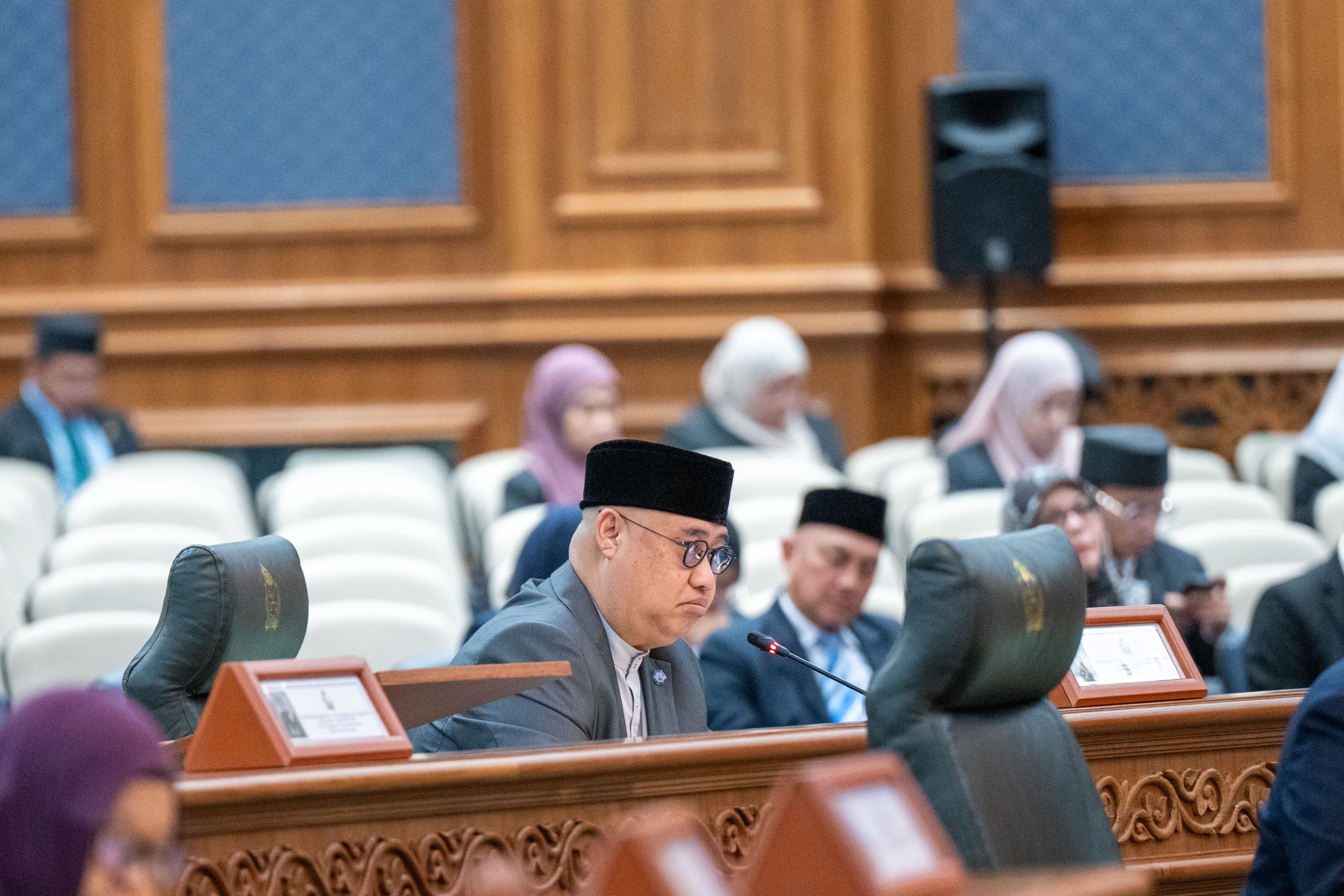
The minister said this during the ninth day of the First Meeting of the 22nd Session of the Legislative Council (LegCo) in response to a question raised by LegCo member Yang Berhormat Amran bin Haji Maidin.
The minister explained that several inter-ministerial coordination mechanisms have been established as a forward-looking step to empower less fortunate communities. This includes the SKN, which is specifically designed for the use across relevant ministries and agencies.
He shared, “The system is used by the Ministry of Culture, Youth and Sports (MCYS), the Ministry of Religious Affairs, the Ministry of Education, the Ministry of Home Affairs, and the Yayasan Sultan Haji Hassanal Bolkiah. This system has certainly improved the efficiency and effectiveness of the process in assistance application including for school-related assistance. At the same time, this system has allowed agencies to perform data analysis on welfare, or what could be termed as welfare mapping across the country, to develop more accurate and targeted policies. ‘Targeted’ here does not mean off-track but more precise and focused.”
In addition, he also highlighted that several cross-sector and inter-ministerial platforms have been established since 2008, namely the establishment of the National Council on Social Issues (MKIS).
Yang Berhormat Dato Seri Setia Awang Haji Nazmi explained, “MKIS was set up as the leading mechanism to strengthen the well-being of society, particularly as a coordinator for identified social issues. These issues include underprivileged housing, unemployment, poverty, family, women, children, persons with disabilities (PWD), and the el-derly. The council meets to discuss social issues, and its implementation is monitored through various special committees using action plans designed to achieve the established goals.”
He added, “The council includes members from the government sector, with the MCYS serving as the Chair of MKIS. Its members include the Minister of Religious Affairs, the Chairman of Yayasan Sultan Haji Hassanal Bolkiah Board, the Minister at the Prime Minister’s Office, the Minister of Finance and Economy II, the Minister of Health, the Minister of Home Affairs, the Minister of Education, and the Deputy Minister at the Prime Minister’s Office.”
The Special Committees under the MKIS consists of members from the council, representatives from the government sector, the private sector, and non-governmental organisations (NGOs).
Under the Special Committee on Poverty Issues, he said, “The Poverty Eradication Action Plan focuses on ensuring no one is left behind among the citizens and residents who need assistance. Additionally, the action plan is also designed to empower recipients of assistance to break out of the poverty cycle. This effort must be implemented nation-wide, involving not only government agencies but also the private sector and NGOs working together in synergy. The efforts are not solely focused on financial aid but also on skills development to achieve long-term self-sufficiency and provide a conducive support system to enable individuals to generate sustainable income.”
This action plan, he described, “is based on building the capacity of the target groups to become more resilient, self-reliant, and able to improve their socio-economic well-being sustainably, in line with the aspirations of the Brunei Vision 2035. For example, under the Community Development Department (JAPEM), several programmes have been implemented to help beneficiaries become self-sufficient – such as the Employment Plan, Home Business, Community Programmes, and Visionary Youth Innovation Pro-grammes – to ensure that beneficiaries can be independent. Addition-ally. Bank Islam Brunei Darussalam (BIBD) implements the BIBD Seed Programme, while the Department of Zakat, Wakaf, and Baitulmal (JUZ-WAB) runs the Zakat Empowerment Programme (PROPAZ).”
(news source: Borneo Bulletin; pic source: Info Foto, Jabatan Penerangan)