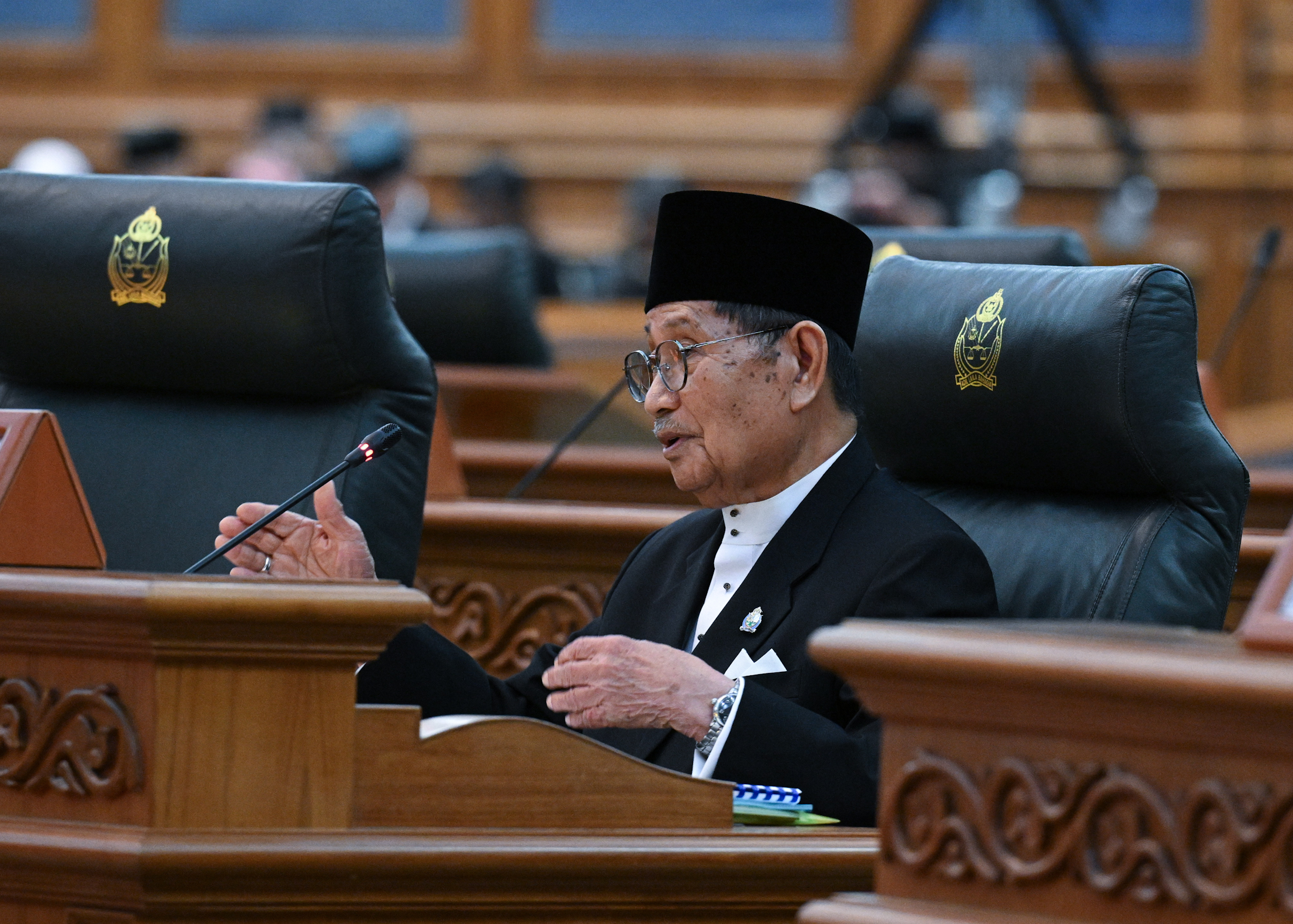
Day nine of the First Meeting of the 22nd Session of Legislative Council (LegCo) saw LegCo members Yang Berhormat Abdul Aziz bin Haji Hamdan, Yang Berhormat Haji Awang Sulaiman bin Haji Nasir, Yang Berhormat Pehin Orang Kaya Laila Setia Dato Seri Setia Awang Haji Abd Rahman bin Haji Ibrahim, Yang Berhormat Hajah Safiah binti Sheikh Haji Abdul Salam, Yang Berhormat Haji Mohd Salleh bin Haji Othman, Yang Berhormat Haji Mohamad Danial @ Tekpin bin Ya’akub and Yang Berhormat Haji Salleh Bostaman bin Haji Zainal Abidin raising several matters on religious affairs.
These matters include halal regulation (certification, enforcement, misuse, non-food products); Islamic practices (moon sighting, religious dates, hudud law); religious economy (zakat, waqaf, aid efficiency); human capital (graduate employability, jurunikah appointments) and digital transformation (integrated religious service systems).
In response to these matters, Minister of Religious Affairs Yang Berhormat Pehin Udana Khatib Dato Paduka Seri Setia Ustaz Haji Awang Badaruddin bin Pengarah Dato Paduka Haji Awang Othman shared that current halal and haram laws are more focused on food, while logistics and transportation aspects are not yet specifically regulated.
However, monitoring is still carried out through existing procedures, including on-site inspections and enforcement actions against misuse of halal labels.
He also explained developments in progressive waqaf, which now involve professional management in finance and investment where this evolution spans from early legal frameworks to a Waqaf Act currently in its final drafting stage, taking into account experiences from countries such as Malaysia and Singapore.
The minister also shared that a Universiti Islam Sultan Sharif Ali (UNISSA) study on zakat recipients shows an increase in beneficiaries but only 15 per cent have become self-sufficient, therefore, entrepreneurship approaches and skills training have been introduced to improve the livelihoods of asnaf (eligible recipients), supported by continuous monitoring and industry collaboration.
He also shared on initiatives to develop experts in Islamic finance and halal food science through early education, higher education scholarships, and the development of an integrated Islamic finance ecosystem involving both government and private sectors. The minister also explained the digital transformation of services under the Ministry of Religious Affairs, with six services identified for digitalisation via an e-services portal, which aligns with a whole-of-government approach, guided by three key success indicators of level of digitalisation, usage rate and user satisfaction.
(news source: Borneo Bulletin; pic source: Info Foto, Jabatan Penerangan)