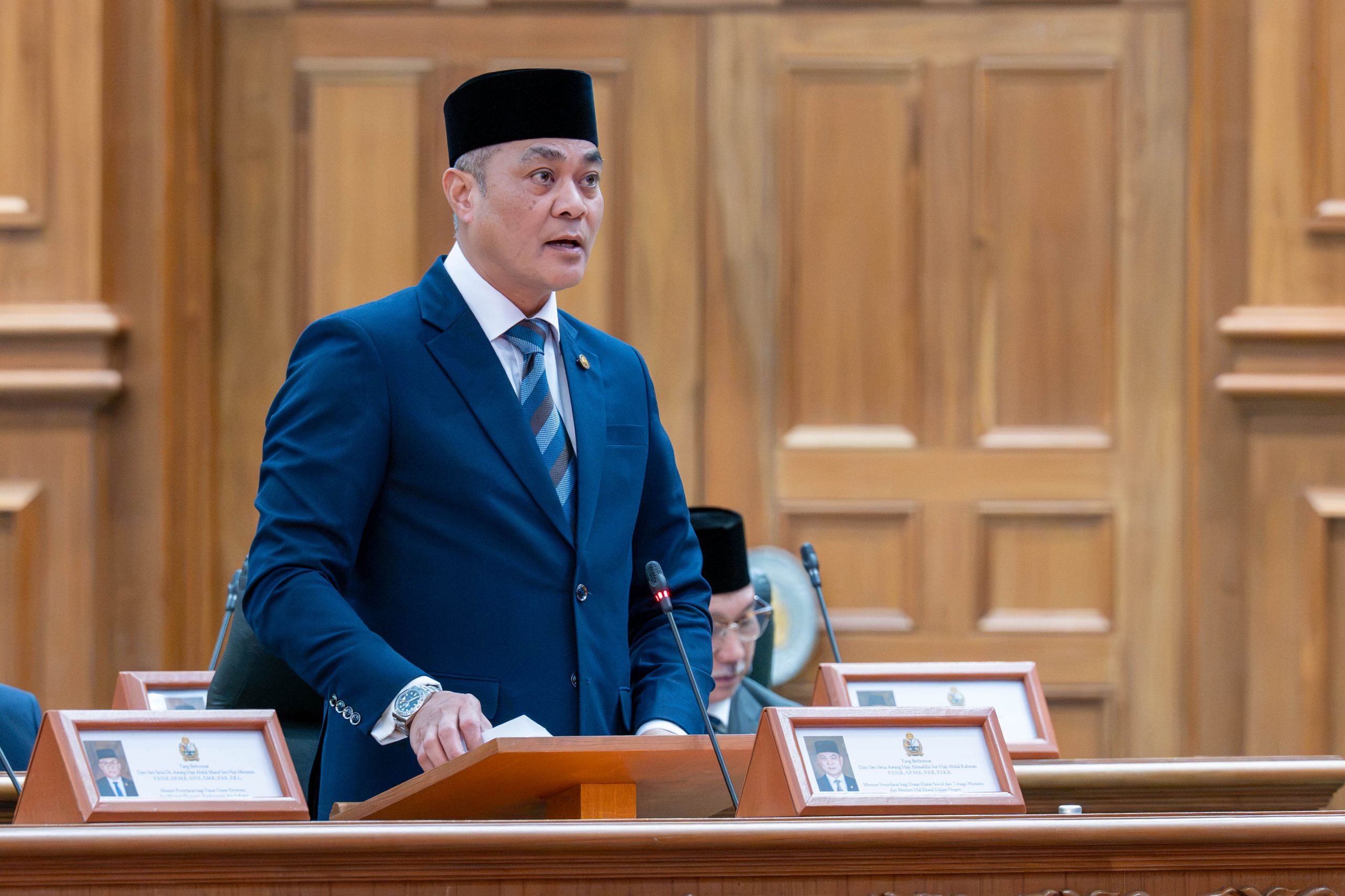
Coordinating Minister for Social Policies and Manpower and Minister of Home Affairs Yang Berhormat Dato Seri Setia Awang Haji Ahmaddin bin Haji Abdul Rahman, during his speech in support of the motion of Coordinated Efforts towards achieving Brunei Vision 2035 yesterday on the first day of the second Meeting of the 22nd Legislative Council (LegCo) Session, emphasized that the challenge of unemployement must be addressed through a more comprehensive approach.
Based on data from the Brunei Employment Centre as of June 2026, there were 14,976 active job seekers, of which 79 per cent or 1,876 individuals, were between the ages of 21 and 35.
Meanwhile, 32 per cent, or 4,740 individuals, were holders of Bachelor’s Degree and above; 31 per cent, or 4,572 individuals, possessed secondary education qualification and below; and 21 per cent or 3,217 individuals, had technical and vocational qualifications.
He said, “These data indicates that unemployment cuts across various backgrounds and is influenced by multiple factors, such as skills mismatches, lack of experience, work readiness, access to transportation, family circumstances, health conditions, salary expectations, and changing industry needs. Therefore, addressing this issue requires closer coordination among government agencies, educational institutions, industry sectors, social agencies, and the community”.
The use of data and labour market analysis, he said, “must also continue to be strengthened to ensure that human capital policies are formulated based on evidence. Information relating to industry demand, emerging skills, employment retention rates, career progression, and workforce productivity should be continuously analysed to ensure that government interventions effectively address current and future needs.”
Human capital development, he said, “is not merely an economic agenda, buta strategic national agenda. When citizens secure quality employment, family well-being improves, society becomes more stable, and the nation becomes more prosperous and resilient. Therefore, all human capital policies must remain centred on ensuring that every capable citizen has the opportunity to build a better future through quality employment, relevant skills, and continuous career development.”
Every economic development effort, he shared earlier in his speech, “must be translated into more meaningful opportunities for local citizens. Success should not be measured solely by the number of jobs created, but also by the quality of employment, career prospects, productivity improvements, skills development, and income levels that can support family well-being.”
In this regard, he emphasised, “localisation efforts must continue to be strengthened – not merely to fulfill numerical targets, but to ensure that local citizens are given opportunities to learn,receive guidance, be entrusted with leadership responsibilities, and eventually take over positions that require specialised expertise. This requires close collaboration between the government,
the private sector, educational institutions, and industries.”
The issue of unemployment comes under the First Strategic Direction: Strengthening Human Capital Development, which is the first of five key strategic directions outlined to serve as the main focus in building a more inclusive, resilient, and prosperous society.
Detailing the Second Strategic Direction: Strengthening the Social Safety Net, the minister said, “the second strategic direction is to strengthen the nation’s social safety net to ensure that it is more targeted, integrated, responsive, and empowerment-oriented. A social safety net is not merely a mechanism for providing assistance, but an investment in building an inclusive, caring, and resilient society. Its primary objective is to help individuals and families transition from dependency towards self-reliance by providing support that enables them to recover, become independent, and contribute to society according to their respective capabilities.”
He added, “The increasingly uncertain geopolitical developments have a direct impact on social well-being, particularly when disruptions to global supply chains result in rising prices of goods and increased cost of living. This situation places greater pressure on low-income groups and vulnerable households, which typically have limited capacity to absorb economic shocks. In this regard, we must continue to strengthen national resilience through a more targeted, responsive, and data-driven social protection system.
“Assistance should be provided according to the level of need and vulnerability of each household, ensuring that those who genuinely require support receive appropriate assistance. At the same time, this approach ensures that government resources are utilised more
efficiently and effectively, while maintaining the nation’s fiscal sustainability to meet the needs of future generations.”
Ultimately, he said, “a strong social safety net not only helps to mitigate the impact of global economic shocks on the lives of the people, but also strengthens community resilience, enhances public confidence in the government’s capacity, and ensures that national development continues in an inclusive, sustainable, and resilient manner.”
Based on available data, from January 1, 2023 to July 24, 2026, he revealed, “a total of 22,274 individuals received assistance, comprising 17,428 recipients under the Department of Zakat, Waqaf and Baitulmal (JUZWAB) and 4,846 recipients through the Department of Community Development (JAPEM)“
Of the total, he said, “58 per cent were individuals aged between 18 and 59 years, 28 per cent were below 18 years old, and 14 per cent were aged 60 years and above. In terms of educational background, 58.2 per cent, or 12,955 individuals, had secondary school qualifications; 27.5 per cent, or 6,125 individuals, had no formal educational qualifications; and 9.4 per cent, or 2,104 individuals, had primary school qualifications. In terms of employment status, 11,649 individuals, or 52.3 per cent, were unemployed; 6,918 individuals, or 31.1 per cent, were students; and 2,121 individuals, or 9.5 percent, were employed.”
The data, he said, “indicates that welfare issues are not solely related to income, but are also influenced by levels of education, employability, employment status, and access to economic opportunities. Therefore, welfare approaches must be more targeted and tailored according to the circumstances and capabilities of each individual and family.” In line with this approach, he said, “the social safety net should be developed based on three main components, namely protection, recovery, and empowerment.”
(news source: Borneo Bulletin ; pic source: Info Foto, Jbt Penerangan)