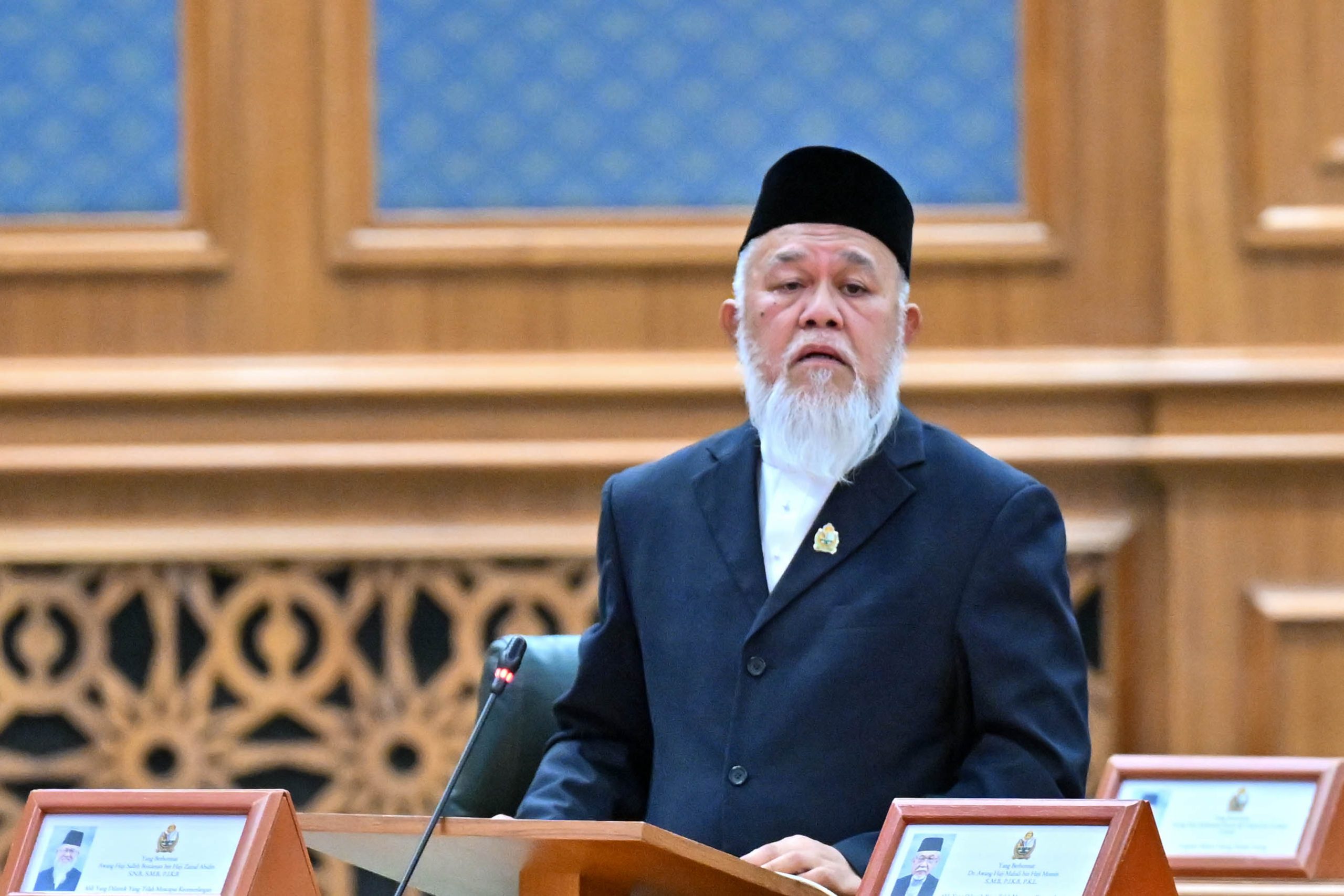
Legislative Council (LegCo) member Yang Berhormat Haji Salleh Bostaman bin Haji Zainal Abidin expressed full support for the appointment of the coordinating ministers, describing the move as a timely and strategic initiative by His Majesty Sultan Haji Hassanal Bolkiah Mu’izzaddin Waddaulah ibni Al-Marhum Sultan Haji Omar ‘Ali Saifuddien Sa’adul Khairi Waddien, Sultan and Yang Di-Pertuan of Brunei Darussalam, to strengthen whole-of-government coordination and accelerate the implementation of national priorities towards achieving Brunei Vision 2035.
Speaking during the deliberations on the motion supporting the coordination framework on the Second Meeting of the 22nd Session of the LegCo, Yang Berhormat Haji Salleh Bostaman said the appointments reflected His Majesty’s wisdom and clear vision, as outlined in the titah during the opening and closing of the 92nd Cabinet Ministers’ Meeting.
He said the new structure would help strengthen coordination among ministries, address cross-ministerial and cross-portfolio challenges, and ensure national priorities are translated into well-coordinated actions with faster and more effective outcomes.
According to him, Brunei Darussalam is not lacking in plans, policies, blueprints or key performance indicators (KPIs), as many initiatives have already been researched, planned and documented.
However, with only nine years remaining before Brunei Vision 2035, he stressed that the nation has entered the implementation phase, where tangible progress must be visible and experienced by the people.
He said the role of the coordinating ministers should focus on delivering measurable outcomes through coordinated implementation, supported by clear phases, regular monitoring, performance evaluation and timely corrective action. While noting that coordination itself is not the end goal, he said it should serve as a mechanism to accelerate decision-making, clarify accountability, improve resource allocation and deliver national outcomes that directly benefit the country and its people.
Focusing on three national priorities, namely economic growth, employment and food security, he put forward several recommendations to strengthen the new coordination framework. Among his proposals was translating national priorities into joint coordination action activities, whereby existing KPIs across ministries would be mapped, aligned and prioritised according to their collective contribution towards national outcomes, rather than creating new KPIs.
Using economic growth as an example, he said success should not be measured solely by the number of businesses registered, investment announcements or memorandum of understanding signed, but by investments that become operational, develop domestic supply chains, generate national income and create quality employment opportunities for Bruneians.
He also emphasised the importance of preparing local graduates and workers through early exposure, industry training and skills development to enable them to progress into supervisory and middle-management positions.
He proposed the appointment of a single accountable owner for every national outcome to ensure clear leadership and reduce delays caused by overlapping responsibilities among ministries and agencies.
Referring to employment, he noted that the number of foreign workers in the private sector had increased from around 60,000 in 2021 to more than 82,000 in 2025, while Brunei’s unemployment rate stood at 5.2 per cent in 2025.
He stressed the need for stronger coordination among agencies responsible for work permits, manpower forecasting, education, training, investment, immigration and employers to ensure economic growth translates into quality employment for local citizens.
He suggested mapping work permits due to expire within the next two to three years so that local workers could be trained in advance to fill those positions, rather than waiting for vacancies to arise.
As another recommendation, he proposed the establishment of an Integrated National Wawasan Dashboard to consolidate key national indicators across ministries and measure whether collective efforts are contributing towards national outcomes and the objectives of Brunei Vision 2035.
He said such a dashboard would be particularly useful in monitoring food security by integrating indicators, such as food affordability, availability, supply diversification, strategic stockpiles, storage capacity, supply chain resilience and distribution capabilities.
He also called for a structured performance review schedule, with reviews conducted according to the urgency and importance of each issue.
Every review, he said, should identify required actions, responsible parties, support needed, recovery mechanisms and escalation procedures to ensure faster decision-making and early intervention.
He added that the effectiveness of the coordination framework should also be assessed through public feedback, as citizens are best placed to determine whether government services and programmes are truly accessible, efficient and beneficial. Describing the new coordination structure as a work in progress, he expressed hope that further details would be provided on how resources such as budgets, manpower, data and digital systems would be aligned to support shared national priorities.
(news source: Borneo Bulletin ; pic source: Info Foto, Jbt Penerangan)