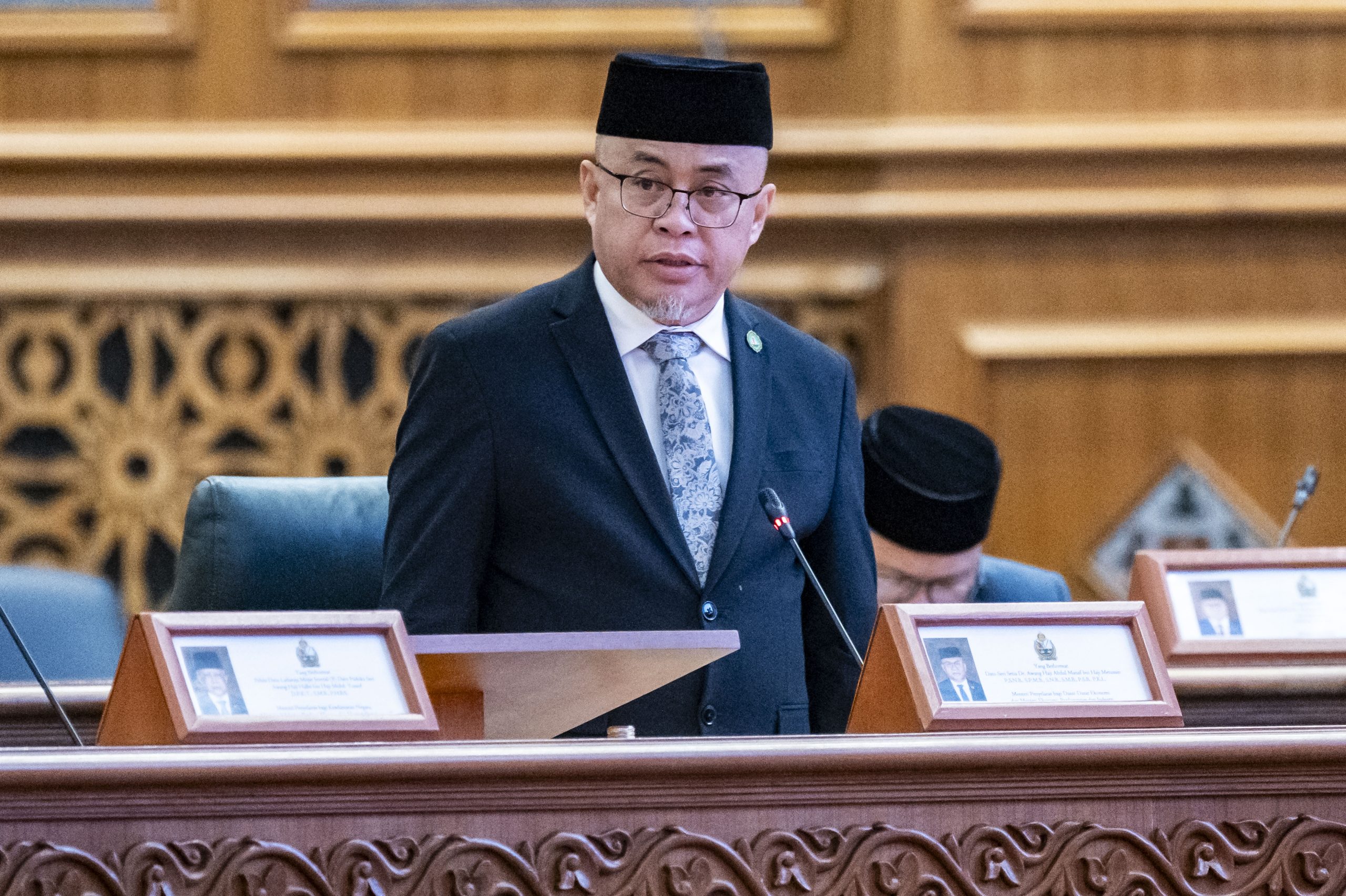
Coordinating Minister for Economic Policies and Minister of Economy,Trade and Industry Yang Berhormat Dato Seri Setia Dr Haji Abdul Manaf bin Haji Metussin on the second day of the Second Meeting of the 22nd Legislative Council (LegCo) Session revealed that the government continuously examines the entire value chain to understand the factors contributing to price changes to ensure that any price increases are justified by actual costs.
Yang Berhormat Dato Seri Setia Dr Haji Abdul Manaf was responding to a query made by LegCo member Yang Berhormat Hajah Safiah binti Sheikh Haji Abdul Salam on the extent to which the ministry has examined the price increases of goods and the entire value chain to identify at what level prices increased.
The minister said, “The rise in prices is a global phenomenon affecting most countries. Global economic uncertainty, including geopolitical conflicts, has led to higher oil prices, increased energy costs, and rising international transportation and logistics expenses, as well as disruptions to global supply chains. The increase of cost at every stage of the value chain may ultimately be reflected in higher prices paid by consumers.”
To better understand the conditions within specific industries and identify the causes of price increases, he said, “One of the initiatives undertaken by the Ministry is to engage directly with businesses and industry players. This approach has been implemented to assess the impact of the situation in the Middle East on the plastics industry and shipping costs in the country.
“Such engagements enable the government to introduce appropriate, evidence-based mitigation measures where necessary, while balancing consumer interests with the sustainability of business operations in an ever-changing economic environment.”
In addition, the ministry implements and enforces the Price Control Act for subsidised goods such as rice, sugar, and gasoline, as well as selected essential items including cooking oil and powdered infant formula.
Through this enforcement, the government ensures the affordability and accessibility of these essential goods to the public. The enforcement of the act also contributes to maintaining the inflation of the country at a stable level, despite exposure to global economic uncertainties such as international inflation, disruptions to global supply chains, and rising raw material costs, all of which affect the prices of goods.
At the same time, to ensure market balance and avoid the adverse effects of excessive market intervention, he shared, “The government places strong emphasis on improving price transparency. This is achieved through a weekly price monitoring initiative covering selected essential food items, involving the collection of price data from more than one hundred retail outlets and supermarkets nationwide.
“This information will continue to be made available through the PenggunaBijak application, which is currently undergoing enhancements to strengthen its security features and is expected to be reintroduced in the near future to enable consumers to make informed price comparisons.
“In the meantime, the price information continues to be published on the Consumer Affairs Division’s website to ensure that the public has uninterrupted access to the latest pricing information.”
The price monitoring initiative, he highlighted, “also enables the government to assess whether price changes are justified. It helps detect sudden price increases and identify their underlying causes, such as rising raw material costs or supply chain disruptions.
“Analysis of the price monitoring data serves as an early warning signal, enabling coordinated interventions to address issues that may potentially affect price stability.”
In addressing the impact of rising prices, he emphasised, “Businesses also play an important role in maintaining a stable supply chain by diversifying import sources and seeking lower-cost and more affordable import alternatives to replace existing suppliers.”
He also iterated that the ministry remains committed to preserving price stability and strengthening the economic resilience of the country through a whole-of-government approach and the implementation of Industry Roadmaps under the Economic Policy Coordination (EPC) Division.
These roadmaps serve as strategic instruments for assessing the strengths and weaknesses of the industrial ecosystem across the priority sectors of the nation. Through these assessments, the ministry is able to identify opportunities to enhance productivity and industry competitiveness, address gaps in infrastructure, logistics, and supporting industries, as well as expand local value-added activities and domestic production capacity to reduce reliance on imports and strengthen the resilience of local industries.
(news source: Borneo Bulletin ; pic source: Info Foto, Jbt Penerangan)