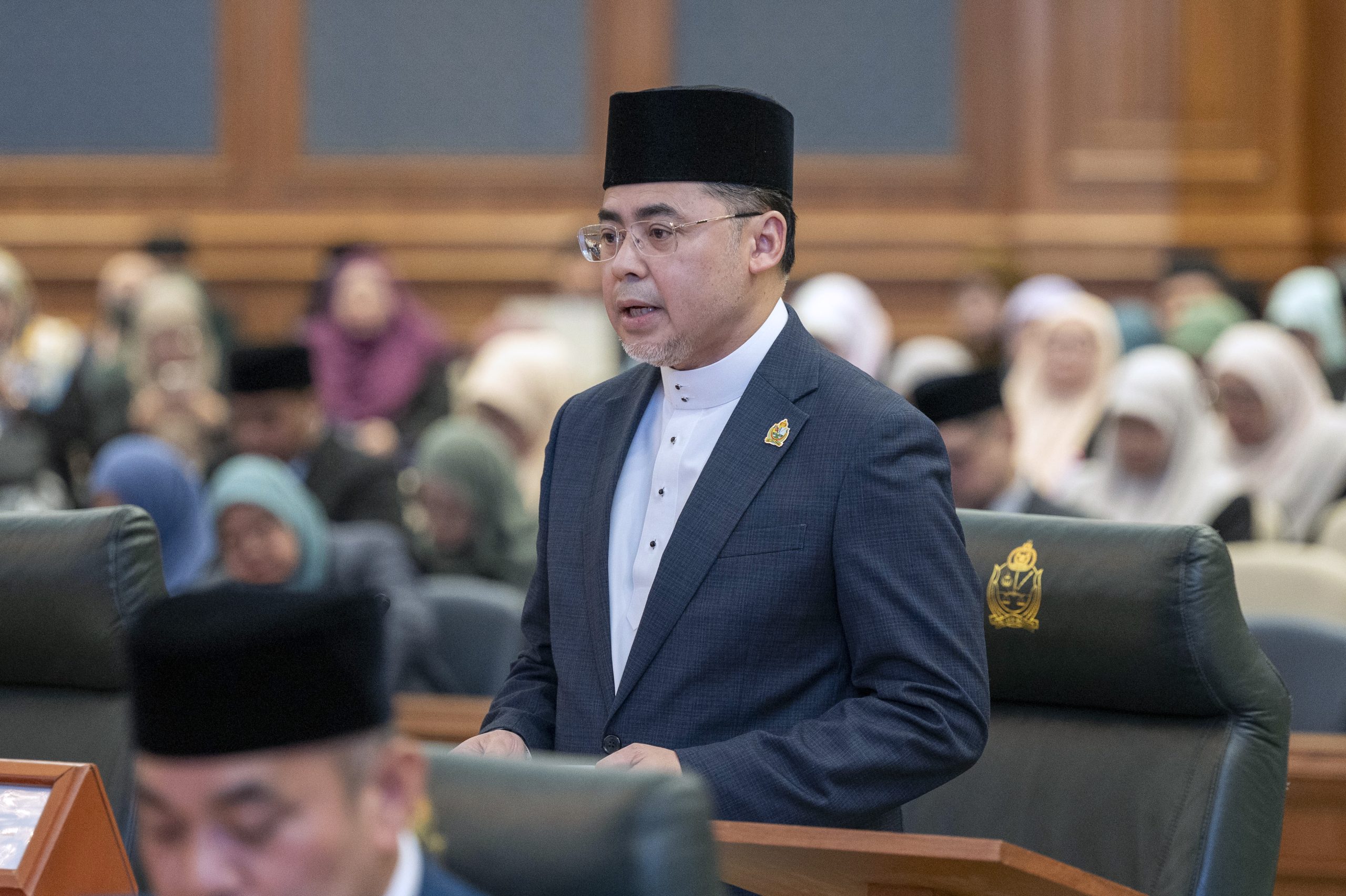
Minister of Religious Affairs Yang Berhormat Pengiran Dato Seri Setia Haji Mohammad Tashim bin Pengiran Haji Hassan yesterday on the fourth day of the Second Meeting of the 22nd Legislative Council (LegCo) Session acknowledged that the digital space has now become an integral part of everyday life.
The Ministry of Religious Affairs (MoRA) is implementing a strategy focused on four key areas to further expanding dakwah through digital platforms to engage younger generations and address the spread of unauthenticated religious information on social media.
In response to queries by LegCo members Yang Berhormat Mohammad bin Abdullah @ Lim Swee Ann and Yang Berhormat Amran bin Haji Maidin, he outlined the four areas that are expanding the reach of digital dakwah; providing authentic and authoritative religious content; addressing the spread of misleading or inaccurate religious information; and strengthening youth identity and values through programmes that are relevant to current developments.
In the aspect of expanding the reach of dakwah through digital platforms, he shared, “The Islamic Da’wah Centre manages a dakwah network across nine major digital platforms, with a combined following of more than 63,000. These platforms include Instagram, Facebook, TikTok and WhatsApp Channel, used to deliver religious content in a more accessible manner, particularly to younger members of the community.”
In addition, he revealed, “The Brunei Darussalam Mushaf Application, which provides digital access to Al-Quran, has recorded nearly 50,000 downloads. Meanwhile, Seri Begawan Religious Teachers University College (KUPU SB) has also expanded the dissemination of knowledge through its digital academic platforms.”
In terms of providing authentic and relevant religious content, he shared, “The ministry focuses on producing authoritative religious content that is aligned with contemporary communication approaches. Among the initiatives being implemented are the publication of Friday Sermon E-Poster Infographics, the video series ‘Kan Tanya Ustaz’, and the ‘Da’ie Basanayan’ podcast, which present religious knowledge and guidance in formats that are more accessible and relatable to younger audiences.”
He added, “The ministry is also strengthening the capabilities of religious preachers through training and workshops on digital dakwah content creation, enabling religious messages to be delivered more effectively and in ways that are suited to technological developments.”
With regard to efforts to address the spread of unauthenticated religious information on social media, he highlighted, “The ministry is not only increasing the availability of authentic religious reference materials that are easily accessible to the public through the official social media platforms of the Islamic Da’wah Centre, but also through the Religious Enforcement Division. If action is required, the matter will also be handled with relevant agencies within their respective jurisdictions and laws.”
He added, “If issues arise that require clarification, the ministry will issue official explanations through official channels to provide guidance to the public. For example, several days ago, the ministry issued a media statement reminding the public to remain vigilant regarding religious and spiritual programmes that have not received approval from the Brunei Islamic Religious Council (MUIB), following the detection of activities by certain individuals or groups believed to be attempting to influence the community and disseminate teachings that are questionable or contrary to Islamic law and the teachings of Ahli Sunnah Wal Jama’ah.”
In addition, he said, “Friday sermons are also utilised as a platform to address and provide clarification on current issues relating to religious understanding.”
On the efforts to strengthen religious education and youth guidance in the digital era, he said, “The ministry implements various programmes combining digital and face-to-face approaches to nurture good character, identity and religious values among young people. Among these is the National Religious Programme, conducted regularly at Arabic and religious schools nationwide. The programme covers areas including faith, morality, patriotism, family values, prevention of social problems and character development.”
He expressed, “Alhamdulillah, based on records for the 2025–2026 session, 3,102 young men and women were registered under the National Mosque Youth Groups. Of the 120 mosques, prayer halls and religious halls listed, approximately 91 have actively registered youth members. Various programmes have been conducted, including Program IMPACT, Malam Munajat, Digital Workshops, Youth Team-Building activities, dakwah video competitions, community service programmes and educational visits. These initiatives aim to nurture young people who are well-mannered, skilled and actively involved in mosque activities.” He mentioned, “The ministry’s approach is to utilise digital platforms as a means of reaching and engaging young people, while continuing to strengthen face-to-face programmes to nurture good character, personal development and the continuous appreciation of Islamic values. Through this comprehensive approach, the ministry will continue to expand dakwah and religious education that are relevant to the challenges of the digital era, while ensuring that the public, particularly young people, have access to authentic religious guidance and develop the resilience needed to navigate misleading information, moral issues and contemporary social challenges.”
“The digital space is open and constantly evolving. Therefore, the ministry’s focus is to ensure that authentic and authoritative sources are easily accessible, while equipping young people with the ability to assess the credibility of sources, compare information and seek clarification from the relevant authorities,” he explained.
However, he also emphasised, “The role of parents and guardians is equally important. Existing formal religious education should be further strengthened through positive role modelling, guidance and consistent practices at home, such as guiding children in performing their obligatory prayers, observing proper etiquette and modesty, and using digital platforms responsibly.”
(news source: Borneo Bulletin ; pic source: Info Foto, Jbt Penerangan)