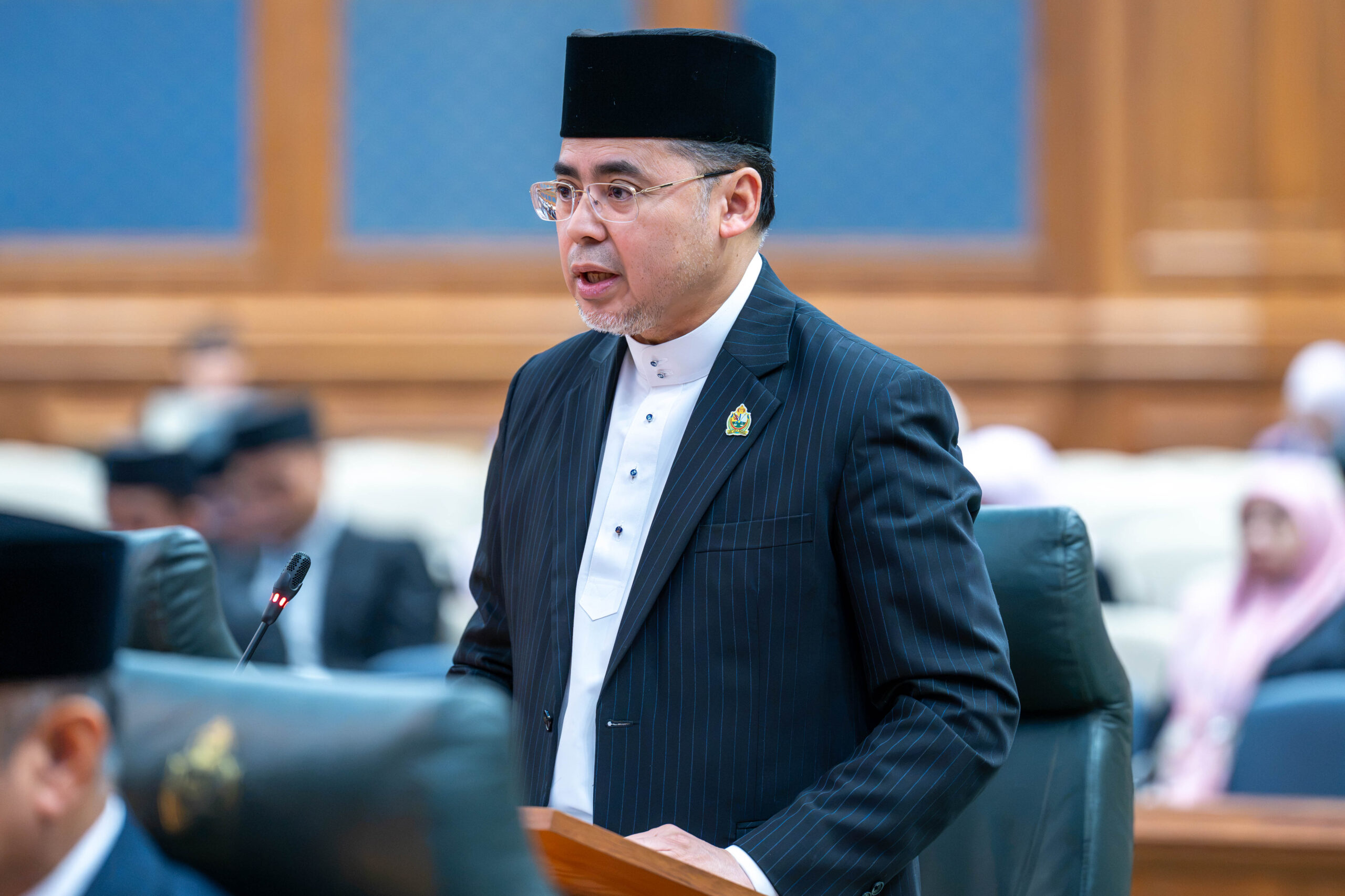
Good governance grounded in Islamic principles must focus not only on administering rules, institutions and resources, but also on achieving public welfare, upholding justice and preventing harm, said Minister of Religious Affairs Yang Berhormat Pengiran Dato Seri Setia Haji Mohammad Tashim bin Pengiran Haji Hassan.
He said this in his concluding speech at the Second Meeting of the 22nd Session of the Legislative Council (LegCo). The minister expressed gratitude to Allah the Almighty that the session was conducted in an orderly, smooth and cooperative manner, adding that the session held particular significance for him, having taken his oath on August 3 as an official member by virtue of his appointment as the minister of religious affairs.
“Being a member of the LegCo is not merely a position, but a trust,” he said, stressing that the responsibility requires members to present their views responsibly.
He added that every question, proposal and response requires preparation and careful consideration as they form part of the official record that can be assessed by the public and future generations.
The minister said the session demonstrated LegCo’s importance as a platform for bringing together knowledge, administrative experience and public perspectives to collectively examine government policies and areas for improvement.
He explained that questions provide opportunities to seek clarification, debates allow issues and policies to be examined in greater depth, while motions bring specific matters before the council for consideration and decision.
The minister also noted that within a governance framework based on Syara’, the administration of the country should be regarded as a trust aimed at achieving maslahat (public benefit) and preventing mafsadah (harm).
“Therefore, when considering a policy, the assessment should not merely be whether it can be implemented, but also the benefits it produces, the harm it prevents, the rights of the people that are protected and whether its implementation is aligned with Syara’,” he said.
He described this as the essence of administration as a trust, in bringing about good, upholding justice and preventing corruption and harm.
The minister also highlighted how the council embodies this spirit in accordance with the Constitution, the Standing Orders and the philosophy of Malay Islamic Monarchy (MIB).
Under the country’s system of monarchy, members engage in deliberations, seek clarification, debate policies and put forward views and proposals for the benefit of religion, the monarch, people and the nation.
He said the value of the LegCo lies in the quality of its scrutiny, the willingness of all parties to listen and the follow-up actions arising from its debates.
Throughout the session, questions, ministerial statements and debates covered matters concerning public welfare, national development, religious life and governance.
For the Ministry of Religious Affairs (MoRA), the minister noted that particular attention was given to the delivery of religious services, strengthening institutions and adapting them to current needs, adding that the views raised during the session would serve as a basis for reflection and further examination to ensure that the ministry remains relevant and effective while continuing to be guided by Syara’, the objectives of Islamic law (Maqasid Syariah) and the MIB philosophy.
The minister also highlighted Motion No 4/2026, concerning support for coordination towards achieving Brunei Vision 2035, which was debated and unanimously approved by all members on August 6.
He welcomed the motion, saying the appointment of three coordinating ministers was a strategic step towards strengthening coordination across ministries and ensuring that government policies are implemented in a more organised and effective manner.
The motion emphasised clarity of responsibilities, decision-making efficiency, an outcome-focused approach and public participation, all of which, he said, would translate into tangible benefits for the people.
“The principles of Maqasid Syariah will certainly serve as a benchmark in coordinating policies and delivering services to the people,” he said.
Guided by these principles and the MoRA Strategic Plan 2025-2029, he pledged to ensure that the ministry’s five strategic pillars were translated into focused actions.
These include strengthening quality religious and Arabic education; improving efficient and innovative service delivery; strengthening inclusive dakwah and social well-being; reinforcing sustainable human capital; and exploring dynamic economic development opportunities.
The latter includes entrepreneurship, socioeconomic empowerment of the Muslim community, zakat and waqaf management, and high-impact research.
The ministry’s strategic plan has been aligned with Brunei Vision 2035, as well as relevant national development blueprints and agendas, noting that “its progress will be coordinated and monitored regularly to ensure that its benefits are genuinely felt by the people.”
The minister also said the MoRA plays an important role in supporting the country’s development agenda through an integrated approach, in line with the focus of the coordinating ministers on strengthening community well-being, national harmony and human development, all of which are rooted in Islamic values. The minister also touched on Motion No 5/2026 concerning the formulation of a Code of Ethics and Conduct for LegCo members.
The motion was approved with amendments, with the draft code to be referred to a committee for further examination and refinement before being resubmitted to the council within six months.
He said the formulation of the Code should not be viewed merely as a matter of regulations, but as an effort to strengthen a culture of trust, responsibility and professionalism within the LegCo.
“A Code that is clearly, comprehensively and practically formulated, and implemented fairly, will serve as a common guide in safeguarding the dignity of the council and strengthening public confidence,” he said, adding that the two motions discussed during the session were complementary.
While the motion supporting coordination towards achieving Brunei Vision 2035 strengthens the country’s direction and implementation capacity, the motion on the Code of Ethics and Conduct strengthens the values of trust, integrity and institutional credibility.
“When direction, implementation and trust move together, Insya Allah, every effort will be more effective and bring maslahat to the nation and its people,” he said.
(news source: Borneo Bulletin ; pic source: Info Foto, Jbt Penerangan)