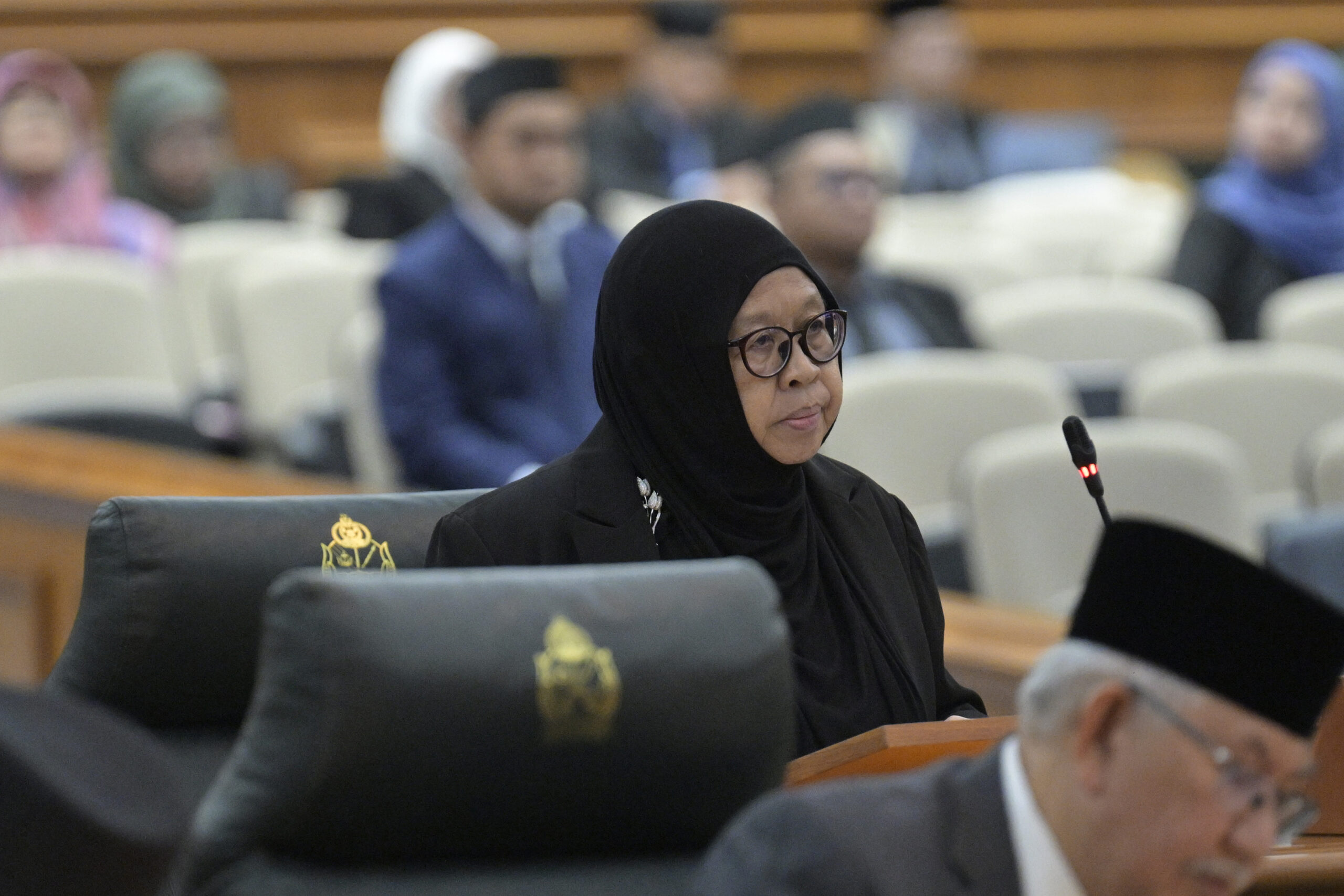
Legislative Council (LegCo) member Yang Berhormat Hajah Rosmawatty binti Haji Abdul Mumin called for clearer implementation procedures and regular reviews of the proposed Code of Ethics and Conduct for LegCo members to ensure it serves as a practical guide grounded in integrity, accountability and public interest.
Supporting the concept and framework of the Code, she said its effectiveness should not only be measured by the principles it contains, but also by how clearly its provisions can be understood, referenced and applied when real-life situations arise.
Yang Berhormat Hajah Rosmawatty proposed several areas for refinement, particularly in relation to the scope of the Code, declaration of interests, complaints procedures, disciplinary action and periodic reviews.
On the applicability of the Code, she suggested that Clause 1.6 make direct reference to Clause 10, clarifying which obligations remain in force after a member’s term ends.
This would provide former members with clearer guidance on continuing responsibilities, including maintaining confidentiality and refraining from misusing their title or position.
She also proposed incorporating the provisions under Clause 4, concerning the application of the Code within and outside the country, into Clause 1.6.
She said the key consideration should be the capacity in which a member acts and the trust entrusted to them, rather than their physical location.
On declaration of interests under Clause 6, she called for consistent procedures to be established following the declaration of a personal, financial, business or other relevant interest.
She stressed that declaring an interest should not be viewed as an indication that an offence has occurred, but rather as an initial measure to manage potential conflicts of interest transparently.
Yang Berhormat Hajah Rosmawatty also highlighted the importance of maintaining proper records to demonstrate that actual or perceived conflicts have been identified and managed consistently, thereby protecting both members and the integrity of the Legislative Council.
Regarding enforcement, complaints procedures and disciplinary action under Clause 11, she welcomed the proposed complaint channels, preliminary assessment procedures and establishment of an Investigation Board when required.
However, she suggested that the complaints process be structured into clearly defined stages, from the receipt and initial screening of complaints to notification of the member concerned, opportunities for explanation, examination of facts and communication of decisions.
She also proposed setting reasonable timelines for each stage to ensure all parties have a clear understanding of the process.
For the Investigation Board, she recommended clearer guidelines on its membership, including requiring members with a personal interest or relationship to the matter under investigation to declare the conflict and recuse themselves.
Similarly, LegCo member Yang Berhormat Hajah Safiah binti Sheikh Haji Abdul Salam said the proposed Code of Ethics and Conduct should be further refined to ensure clarity, fairness and effective implementation.
She stressed that suggestions to improve the Code should not be viewed as rejection, but rather as an indication of the members’ commitment to ensuring the Council has a robust, clear and credible framework to safeguard institutional integrity.
Among the areas she highlighted was Clause 1.6 on the applicability of the Code of Ethics and Conduct. She called for clearer wording to distinguish the obligations that apply during a member’s term of service from provisions applicable after their service ends under Clause 10.
She also supported incorporating provisions concerning ethics and conduct at official events overseas into Clause 1.6, emphasising that the Code should apply wherever members perform their duties or act in an official capacity, whether within or outside the country.
On conflict of interest, she pointed to potential inconsistencies in Clauses 6.1.2 and 6.1.5 regarding whether financial-interest declarations are encouraged or mandatory.
She proposed that members be required to declare their assets, sources of income, financial interests and company shareholdings, including those involving their spouses and children, upon appointment, annually and whenever changes arise that could create a conflict of interest.
She also called for clear and simple procedures for declarations to ensure members can fulfil the requirement without unnecessary burden, while maintaining the highest standards of transparency and public trust.
On the declaration of gifts and souvenirs under Clause 6.3, Yang Berhormat Hajah Safiah recommended that all gifts, souvenirs and offers of benefits be recorded and declared to the Legislative Council, regardless of whether they are accepted or declined.
She proposed that gifts should only be accepted after obtaining the Council’s approval, while cash gifts should be strictly prohibited.
Turning to Clause 9.3 on ethical use of social media, she said the provision should be further detailed to avoid subjective interpretations.
She noted that social media serves as a platform for public discussion, and that firm or controversial views do not necessarily constitute a breach of ethics or the law.
She said clearer provisions would protect members while ensuring that public discussion remains transparent and responsible, allowing the concerns and views of the public to be conveyed appropriately.
On enforcement, complaints procedures and disciplinary action under Clause 11, she welcomed the provision as demonstrating the council’s commitment to addressing alleged breaches through a transparent and fair process.
However, she suggested further consideration be given to the composition of the Board of Inquiry, including qualified professionals who are independent and free from conflicts of interest.
Such an approach, she said, would strengthen public confidence in the enforcement process, protect complainants and safeguard the rights of members subject to complaints. She also recommended that implementation of the Code be accompanied by clear communication and appropriate training to ensure all members understand its provisions and procedures.
(news source: Borneo Bulletin ; pic source: Info Foto, Jbt Penerangan)