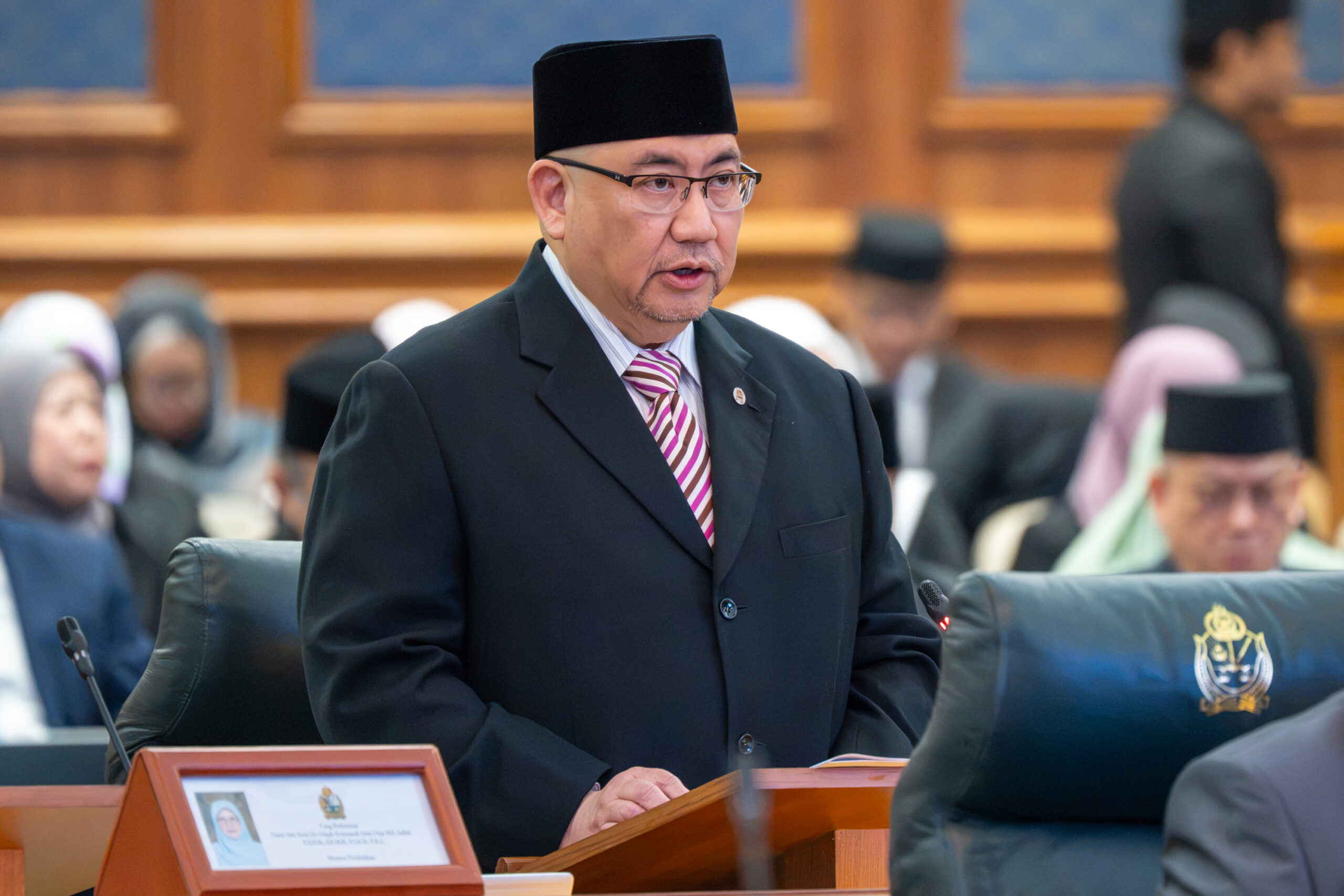
Brunei Darussalam continues to maintain competitive telecommunications services, with consumers benefiting from lower prices and larger data allowances, said Minister of Transport and Infocommunications Yang Berhormat Dato Seri Setia Awang Mohammed Riza bin Dato Paduka Haji Mohammed Yunos during the Second Meeting of the 22nd Legislative Council (LegCo) session yesterday.
The minister said the government, through the Ministry of Transport and Infocommunications (MTIC) and the Authority for Info-communications Technology Industry of Brunei Darussalam (AITI), continues to promote healthy competition while encouraging improvements in service quality and innovation.
He was responding to a question from LegCo member Yang Berhormat Awang Zainol bin Mohamed on how the government ensures the telecommunications industry remains competitive in terms of pricing, data capacity and service innovation amid growing access to cross-border digital services.
Citing the ITU ICT Price Basket 2025, the minister said Brunei ranked second in ASEAN across all indicators, behind Singapore, and 29th out of 208 countries.
The Sultanate was also categorised as having achieved the “Target Met” benchmark for mobile and fixed broadband prices, reflecting continued efforts to ensure quality, affordable and inclusive digital services in line with Digital Brunei 2030.
The minister said affordability was not assessed solely on price, but also on the value consumers receive through data allowances, service features and other benefits.
Entry-level postpaid plan prices, for example, have fallen by 60 per cent. Plans that previously provided eight gigabytes (GB) of data for BND30 now offer up to 18GB, reducing the cost per GB by more than 55 per cent.
The minister said operators must continue to innovate as competition is no longer limited to telecommunications companies operating within Brunei.
On cross-border services, including roaming, the minister said consumers may opt for overseas providers due to factors such as coverage, network compatibility, pricing or their requirements while abroad. He clarified that roaming tariffs are determined commercially through international roaming agreements between operators and their respective overseas partners and are not set by AITI.
The minister added that pricing, package structures and value-added services ultimately remain commercial decisions made by individual operators, which must continue to innovate, improve service quality and offer competitive value to remain attractive to consumers.
The ministry’s approach amid growing cross-border digital choices is not to prevent consumers from using overseas services, but to create an environment that enables the local telecommunications industry to remain competitive.
(news source: Borneo Bulletin ; pic source: Info Foto, Jbt Penerangan)